◦ Comprehensive security
◦ 24/7 support
WordPress Guide → Hosting → Setup CDN
Cloudflare for WordPress: How to setup a CDN

Are you looking for a faster-loading WordPress site? A slow-loading website can be frustrating when the world around your demands for efficiency and fast load times. Having a fast-loading site improves both user experience and search engine ranking.
To optimize your site and improve page speed, you should have a Content Delivery Network (CDN), especially if you have visitors across the globe away from your hosting server.
Get fast, reliable hosting for WordPress
Power your site with the industry’s fastest, most optimized WordPress hosting
Cloudflare for WordPress hosting?
Cloudflare does not provide hosting for WordPress websites. Hosting is where your website “lives,” storing your database, media, and code. Cloudflare doesn’t do that. Instead, it acts like a middle layer between your hosting provider and your visitors.
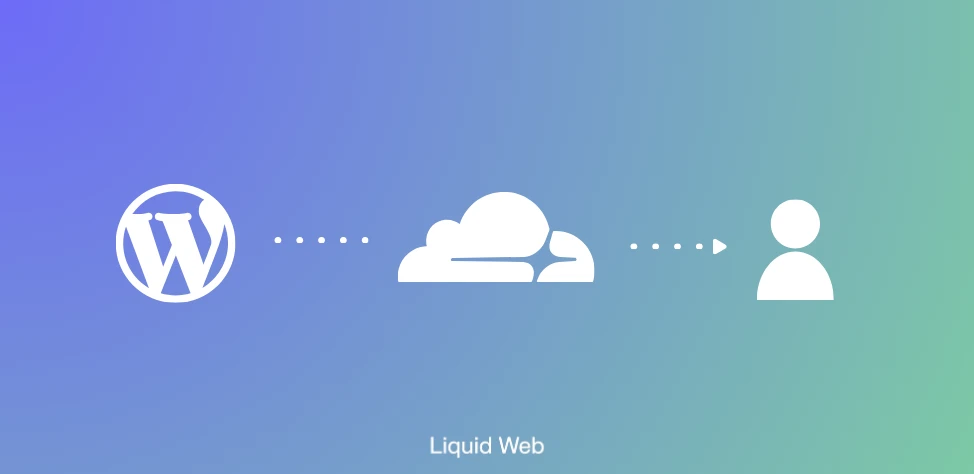
Think of it this way: your WordPress host is the home for your website, and Cloudflare is the security system and delivery network. While your host runs WordPress, Cloudflare distributes your site’s content around the world and protects it from unwanted traffic. Together, they create a faster, more secure browsing experience for your visitors.
How it works: Cloudflare CDN for WordPress websites
A content delivery network (CDN) is a system of servers distributed worldwide that store cached copies of your website content. When someone visits your WordPress site, the CDN serves data from the nearest server location instead of always pulling it from your hosting server. This reduces latency, speeds up loading, and reduces strain on your host.

Cloudflare goes one step further by working as a proxy. This means traffic flows through Cloudflare before reaching your server. As a proxy, Cloudflare hides your server’s real IP address, shields it from attacks, and decides whether to serve cached content or fetch new content from your hosting.
Another big part of how Cloudflare works is SSL (Secure Sockets Layer) encryption. Normally, you’d buy an SSL certificate from your host or a third party to ensure your site uses HTTPS. With Cloudflare, SSL is handled automatically. This protects logins, payments, and other sensitive data from being intercepted, which is crucial for WordPress sites that collect user information.
Cloudflare also improves security by filtering malicious traffic. It:
- Blocks denial-of-service (DDoS) attacks
- Prevents bots from overwhelming your site
- Uses built-in firewalls to stop suspicious requests before they ever reach your WordPress hosting server.
This means your site runs faster and safer at the same time.
How to set up Cloudflare for WordPress
Getting Cloudflare running with your WordPress site only takes a few steps, but each one is important for a smooth setup.
Note: If you’re already a Liquid Web customer, check out Help Docs for more specific details.
1. Create a Cloudflare account
Go to Cloudflare’s website and sign up for a free account. After entering your email and password, Cloudflare will ask you to add your website. Type in your WordPress site’s domain and move forward.
2. Choose a Cloudflare plan
Cloudflare offers a free plan that’s more than enough for most WordPress beginners. It includes the CDN, DDoS protection, and SSL. Paid plans add advanced security, analytics, and performance features, but you don’t need them to start.
3. Update your DNS settings
Cloudflare will scan your existing DNS records from your domain host. Review them and confirm they match your host’s settings. Then, Cloudflare will give you two new nameservers.
Go to your domain registrar and update your nameservers to the ones Cloudflare provides. This step is what officially connects your WordPress site to Cloudflare.
4. Install the Cloudflare WordPress plugin
Once your nameservers update (this can take a few hours), install the Cloudflare plugin on your WordPress site. This plugin makes it easier to clear cache, adjust settings, and enable performance features without logging into Cloudflare’s dashboard every time.
5. Configure basic settings
From the WordPress dashboard, connect the plugin to your Cloudflare account using your API key. Then turn on essential features like “Automatic Platform Optimization (APO)” if available, “Always Use HTTPS,” and caching optimizations. These settings will give your site a quick speed and security boost right away.
Benefits
When WordPress runs through Cloudflare, you get improvements on both performance and protection.
- Faster load times: Visitors get your site’s content from the nearest Cloudflare server.
- Reduced server strain: Cached files mean fewer direct requests to your WordPress hosting server.
- Better security: Cloudflare filters out hackers, bots, and DDoS attacks before they hit your site.
- Free SSL certificates: HTTPS is automatically enabled, even if your host doesn’t provide SSL.
- Higher uptime: If your host goes down, Cloudflare can temporarily serve cached pages to keep your site accessible.
Additional Cloudflare features
Beyond the core CDN and SSL, Cloudflare offers several features that can make your WordPress site even more powerful.
- Firewall rules: These let you block, allow, or challenge visitors based on behavior, IP address, or country. For example, you could block suspicious login attempts or deny access from regions where you don’t do business.
- Automatic Platform Optimization (APO): This is a feature designed specifically for WordPress. It caches not just static files but also dynamic HTML pages, which means your entire site loads faster for both visitors and search engines
- Image optimization (Polish and Mirage): Polish compresses images without losing quality, while Mirage optimizes how images load on mobile devices. Together, they speed up WordPress media-heavy pages significantly.
- Page rules: These allow you to fine-tune how Cloudflare handles certain parts of your site. For example, you might want extra caching for your blog posts but not your checkout page.
- Analytics dashboard: Cloudflare tracks threats, traffic, and performance so you can see exactly how it’s helping your WordPress site.
All of these features are optional but can be toggled on in the Cloudflare dashboard or through the WordPress plugin. They give you more control over how your site performs and how well it’s protected.
Cloudflare + WordPress FAQs
Getting started with Cloudflare WordPress setup
A Content Delivery Network (CDN) is an important service that can optimize your site to the next level. You can use Cloudflare to speed up and secure your WordPress website for free if you are looking for a reliable content delivery service with excellent security and performance improvements. Apart from changing the domain’s nameserver, you really don’t need to be tech-savvy to use Cloudflare. Once this service is activated, you should be good to go.
Ready to take the training wheels off your WordPress site? Upgrade to professional hosting and see how better speeds, security, and reliability provide a foundation for a website and a brand that people find engaging and trustworthy. Liquid Web’s WordPress hosting options configure business-class servers and support plans specifically for WordPress websites.
Click through below to explore all of our WordPress hosting options, or chat with a WordPress expert right now to get answers and advice.
Additional resources
What is managed WordPress hosting? →
Get details and decide if managed WordPress hosting is right for you.
What is managed WordPress hosting? →
Whether you’re a blogger, small business owner, or aspiring entrepreneur, chances are you’ve heard of WordPress. It’s a great tool for building your online presence, but it requires web hosting – which can be tricky if you’re not familiar.
A complete guide to WordPress shortcodes →
Shortcodes make life easier. Learn how to get started!