◦ Comprehensive security
◦ 24/7 support
VPS → Managed VPS
What is managed VPS hosting?
When your business outgrows shared hosting but doesn’t need the cost or complexity of a dedicated server, managed VPS hosting hits the sweet spot. You get dedicated resources and full server control, without having to manage updates, security, or maintenance yourself.
Let’s break down exactly what managed VPS hosting is, what makes it different from unmanaged options, and how to choose the right provider.
What does managed VPS hosting include?
Managed VPS (Virtual Private Server) hosting is a service where your hosting provider takes care of all the behind-the-scenes server management tasks—while you keep control over your website, apps, and data.
You get a virtual server with dedicated resources, typically in a cloud-based environment. But instead of being responsible for system-level tasks like applying patches or troubleshooting performance issues, your provider’s team handles it for you.
Here’s what’s usually included:
1. Technical management and maintenance
Managed VPS hosting includes ongoing system administration tasks such as:
- Operating system (OS) updates
- Security patching and vulnerability monitoring
- Proactive performance tuning
- 24/7 monitoring and support
You don’t need to hire an in-house sysadmin or learn command-line tools just to keep your site running smoothly.
2. Isolated CPU, RAM, and storage
Unlike shared hosting, where your site competes with others for resources, any VPS gives you a predetermined share of CPU, memory, and storage. That translates to:
- Faster load times
- More predictable performance
- Less risk of downtime from noisy neighbors
3. Root access and control
Many managed VPS plans offer root or full admin access. That means you can:
- Configure your server how you want
- Choose your preferred control panel (like cPanel or Plesk)
- Install custom software or scripts
4. Scalability on demand
Your VPS environment is easy to scale. Need more RAM, CPU, or disk space? Just upgrade with a few clicks—no migrations or downtime required. It’s ideal for growing businesses that want to start small and scale fast.
5. OS and software flexibility
You can usually choose your preferred operating system (Linux or Windows) and customize your stack. Whether you’re running WordPress, Magento, Node.js, or custom apps, a managed VPS can support it.
6. Enhanced security protections
Managed VPS hosting typically includes:
- Firewalls and DDoS mitigation
- Regular malware scans
- Security hardening and audits
- Backup and restore tools
Your host keeps your server secure without you needing to lift a finger.
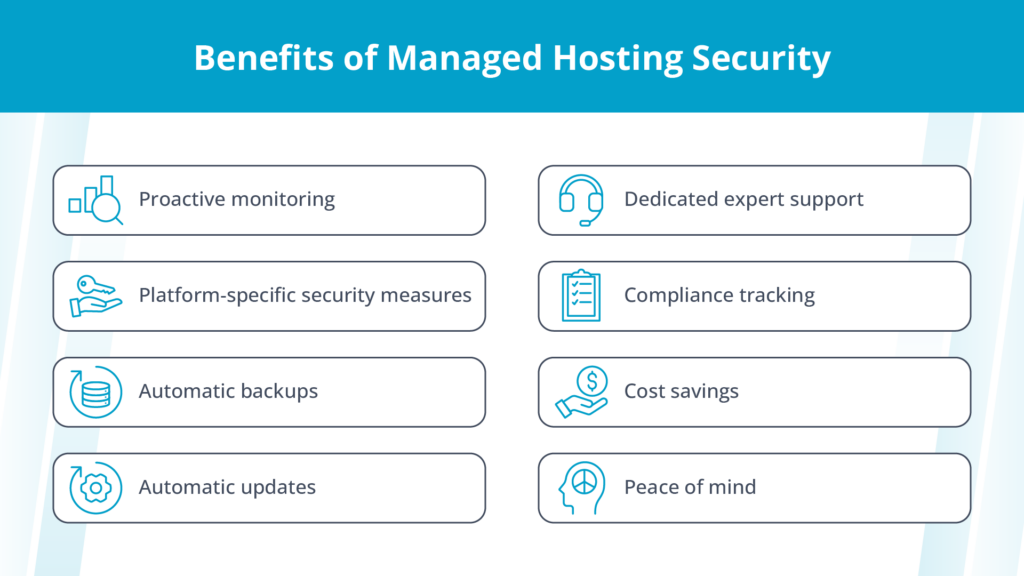
Benefits of managed VPS hosting
Let’s look at why many businesses choose managed VPS over other options.
- Reduced technical burden: You focus on your business, not on server maintenance or command-line troubleshooting.
- High performance: Isolated resources and optimized server environments keep your site fast and stable.
- Built-in security: Providers handle patching, firewall setup, and threat monitoring.
- Scalable and flexible: Easily increase resources as your site or app grows.
- More affordable than dedicated servers: Get many of the same benefits without the higher cost or complexity.
Managed vs unmanaged VPS hosting
Here’s a quick side-by-side of what you’re signing up for with managed vs unmanaged VPS hosting:
| Feature | Managed VPS Hosting | Unmanaged VPS Hosting |
|---|---|---|
| Server management | Fully handled by the provider | You’re responsible for everything |
| Technical skill required | Minimal | High |
| Updates and patches | Automatic | You must do it yourself |
| Support | 24/7 expert assistance | Limited or none |
| Use case | Businesses without a devops team | Developers or sysadmins who want full control |
If you don’t want to manage every aspect of a server environment yourself, managed VPS is the clear choice.
How to choose the right managed VPS provider
Not all VPS providers are created equal. When comparing your options, keep these factors in mind:
Reliability and uptime
Look for providers that offer 99.99% uptime or better, backed by real performance data. A reliable infrastructure is non-negotiable.
Responsive support
Managed hosting is only as good as the support team behind it. Make sure your provider offers:
- 24/7 live chat or phone support
- Fast ticket response times
- Staff with real server expertise
Built-in security features
Security should be included for managed services. Look for:
- Firewalls
- Intrusion detection
- Patch management
- Regular security scans
Server control and flexibility
Make sure you have the level of access you need. Root access, choice of OS, and support for your preferred control panel are all important.
Transparent pricing and resource guarantees
Avoid vague plans or hidden costs. Choose a provider that clearly states:
- How much CPU/RAM/storage you’re getting
- What’s included in the managed service
- How and when you can scale
Managed VPS FAQs
Next steps for managed VPS hosting
Managed VPS hosting gives you the perfect balance of power, flexibility, and simplicity. It’s ideal for businesses that need more than shared hosting—but don’t want to manage their own server stack.
When you’re ready to upgrade your hosting to a high-quality, managed VPS, Liquid Web can help. We’ve been leading the industry for decades, because our VPS servers are fast, cloud-based for easy scalability, and unbeatably reliable. Choose your favorite OS and the management tier that works best for you.
Click below to explore VPS hosting options or start a chat with one of our experts right now to learn more.
Additional resources
VPS: A Beginner’s Guide →
A complete beginner’s guide to virtual private servers
Plesk VPS benefits →
9 key benefits that a Plesk control panel can bring to your VPS server
VDP vs VPS →
What’s the difference and which is right for you?

David Richards has been an educator, a Technology Director, and now a Technical Writer for 20+ years. He’s an English major with a love for technology and helping others find ways to use technology more effectively. In his free time, Dave loves to read, play games, and spend time with his family.