◦ Optimized configs
◦ Industry-leading support
GPU → Use Cases → Financial Modeling
GPU server hosting for financial modeling
Financial models are only as good as the data and speed behind them. Whether you’re forecasting risk, pricing options, or backtesting strategies, you need infrastructure that can keep up. GPU server hosting offers the high-performance compute power required to run simulations, train models, and analyze large datasets—faster and more accurately than traditional CPU-based servers.
Let’s break down why GPU servers are becoming essential in financial modeling, what they can do, and how to choose the right hosting provider.
Get premium GPU server hosting
Unlock unparalleled performance with leading-edge GPU hosting services.
Why GPU servers matter in financial modeling
Financial modeling often involves complex calculations that must run in real time or across massive datasets. Traditional CPU-based infrastructure struggles to scale when models become more detailed, or when speed becomes critical—like during volatile trading hours.
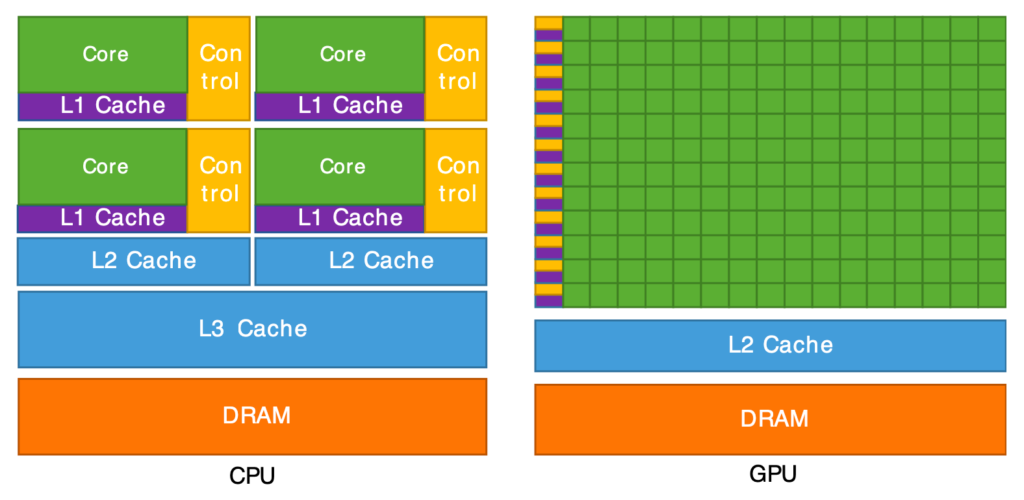
GPU (graphics processing unit) servers are different. They’re designed to handle many operations at once, thanks to their thousands of processing cores. That makes them especially useful for parallel workloads like Monte Carlo simulations, time-series forecasting, and AI-powered risk scoring. Instead of waiting hours for a backtest to finish or a model to retrain, GPU servers can cut that time down dramatically.
Key benefits of GPU hosting for financial workloads
Faster processing and real-time performance
GPU servers are optimized for parallelism, meaning they can perform thousands of calculations simultaneously. This is ideal for risk simulations, derivatives pricing, or recalibrating models with new market inputs in real time.
The result: reduced time-to-insight and the ability to model during live market conditions, not after the fact.
Enhanced predictive modeling and analytics
AI and machine learning are transforming finance. From credit risk scoring to fraud detection, models that once took days to train can now be retrained in hours or minutes. GPU servers make it possible to iterate quickly, test new inputs, and improve accuracy—faster than CPU servers alone.
Improved decision-making under pressure
When the market moves fast, so must your models. GPU hosting helps traders and analysts respond to new information immediately by recalculating exposure, updating scenario forecasts, or rebalancing portfolios—all in real time.
Scalable infrastructure for large models
Modern models, especially those powered by machine learning, demand scalable hardware. GPU servers can be upgraded vertically (more GPUs in a server) or scaled horizontally (more GPU nodes). This flexibility makes them ideal for both startup quant desks and enterprise-level analytics teams.
Use cases for GPU server hosting in financial modeling
High-frequency trading (HFT)
HFT strategies often require model-driven decisions in milliseconds. Co-located GPU servers with low-latency connections to exchanges allow firms to detect patterns, run predictions, and place orders faster than competitors.
Risk analytics and scenario modeling
Regulatory stress testing, Value at Risk (VaR), and scenario forecasting all benefit from GPU acceleration. You can run thousands or even millions of Monte Carlo simulations in parallel to evaluate different market conditions and understand potential exposure.
Asset forecasting and portfolio optimization
Machine learning models can process historical data and real-time feeds to predict future asset movements, detect anomalies, or optimize asset allocation. GPU servers provide the performance headroom needed to iterate and retrain models regularly.
Fraud detection and compliance monitoring
Modern fraud detection involves analyzing thousands of data points per transaction. Deep learning models trained and hosted on GPU servers can detect subtle patterns and flag anomalies that rules-based systems miss—all while complying with industry standards.
Top GPU models for financial modeling
Not all GPUs are created equal. Here are two of the most widely used models in financial modeling today:
NVIDIA L40S
The L40S is built for AI inferencing and data science workloads. It handles large datasets and real-time forecasting extremely well, making it an excellent option for trading desks and analytics teams that need low-latency responses with reliable throughput.
NVIDIA H100
The H100 is NVIDIA’s flagship GPU for deep learning and large-scale simulation. It’s ideal for firms training advanced machine learning models or building large-scale predictive infrastructures. Think of it as a workhorse for the most demanding financial use cases.
Where to find GPU server hosting for finance
Liquid Web
Here, of course. Liquid Web offers dedicated GPU server hosting built specifically for high-performance workloads like financial modeling. With enterprise-grade hardware, managed options, and reliable uptime, it’s a strong choice for firms that want performance without managing servers themselves.
Cherry Servers
Cherry Servers also provides flexible, bare-metal GPU hosting with quick deployment. It’s popular for companies that want infrastructure control without managing physical hardware on-site.
Server Simply
Server Simply offers low-price dedicated GPU servers with customizable specs. It’s a good entry point for firms testing GPU workloads or running smaller modeling environments.
Choosing the right GPU server hosting provider
If you’re new to infrastructure decisions, here’s what to look for in a hosting provider for financial modeling:
1. Performance transparency
Make sure the provider clearly lists the GPU models (e.g., NVIDIA H100, L40S), memory specs, and performance benchmarks. You need to match the server’s capabilities to your specific modeling requirements—whether it’s fast backtesting, deep learning, or Monte Carlo simulations.
2. Dedicated vs. shared hosting
Dedicated GPU servers give you full access to hardware with no noisy neighbors. This ensures consistent performance—critical for real-time or high-frequency modeling. Shared or cloud GPU servers may cost less upfront but can be unpredictable during peak times.
3. Security and compliance
Financial data is sensitive. Look for providers with SOC 2 Type II or ISO 27001 certification, data encryption (at rest and in transit), secure access controls, and backup/recovery solutions. Ask how they support compliance needs for regulations like SOX or SEC guidelines.
4. Support and management
If you don’t have in-house server admins, look for managed hosting. This means the provider handles hardware maintenance, OS updates, patching, and more—so your team can stay focused on modeling and analysis.
5. Geographic proximity
Hosting your GPU server close to your market or exchange reduces latency—especially important for HFT and real-time modeling. Look for providers with data centers in key financial regions like New York and London.
Where to find GPU server hosting for finance
Liquid Web
Here, of course. Liquid Web offers dedicated GPU server hosting built specifically for high-performance workloads like financial modeling. With enterprise-grade hardware, managed options, and reliable uptime, it’s a strong choice for firms that want performance without managing servers themselves.
Cherry Servers
Cherry Servers also provides flexible, bare-metal GPU hosting with quick deployment. It’s popular for companies that want infrastructure control without managing physical hardware on-site.
Server Simply
Server Simply offers low-price dedicated GPU servers with customizable specs. It’s a good entry point for firms testing GPU workloads or running smaller modeling environments.
FAQ about GPU servers for financial modeling
Next steps for GPU server hosting for financial modeling
Financial modeling today isn’t just about formulas, it’s about speed, scalability, and intelligent compute. GPU server hosting delivers the power you need to model markets in real time, train smarter predictive systems, and stay competitive in fast-moving financial environments.
When you’re ready to upgrade to a dedicated GPU server—or upgrade your server hosting—Liquid Web can help. Our dedicated server hosting options have been leading the industry for decades, because they’re fast, secure, and completely reliable. Choose your favorite OS and the management tier that works best for you.
Click below to explore dedicated GPU server options or start a chat with one of our experts to learn more.
Additional resources
Best GPU server hosting [2025] →
Top 4 GPU hosting providers side-by-side so you can decide which is best for you
What is GPU as a Service? →
What is GPUaaS and how does it compare to other GPU server models?
Cloud GPU vs GPU bare metal →
Core differences, how to choose, and more

Philip Palmer is a proud husband and father, and has been Director of Sales at Liquid Web since 2022. His commitment to client partnerships and dedication to excellence enable him to help clients create measurable business growth. A decorated Marine himself, Philip is also the founder and Executive Director of WarriorWOD—a nonprofit that serves to provide hope and holistic PTS recovery for veterans.