Building an omnichannel ecommerce marketing strategy

98% of Americans are regularly switching between devices on the same day, which means customers expect information to be available to them wherever they are and whenever they need it, on multiple channels. This ecommerce hyperconnectivity, coupled with the abundance of competitors in the space, means consumers unknowingly have more control than ever over the buying process. So what does this mean for your business? That adopting an omnichannel ecommerce marketing strategy helps you meet every customer wherever they are. In this article, you’ll learn:
- What omnichannel marketing is
- The difference between omnichannel and multichannel ecommerce
- The importance of omnichannel marketing
- Omnichannel marketing strategies for ecommerce
Get fast, reliable hosting for WordPress
Power your site with the industry’s fastest, most optimized WordPress hosting
Omnichannel ecommerce strategy
The omnichannel experience is a multichannel ecommerce strategy that aims to create an integrated and seamless user experience in both online and offline channels related to the buyer’s journey. This could be in sales, marketing, or customer service.
A successful omnichannel marketing experience is when the customer feels like each interaction with your business is a continuance of the previous exchange.
Are multichannel ecommerce and omnichannel different?
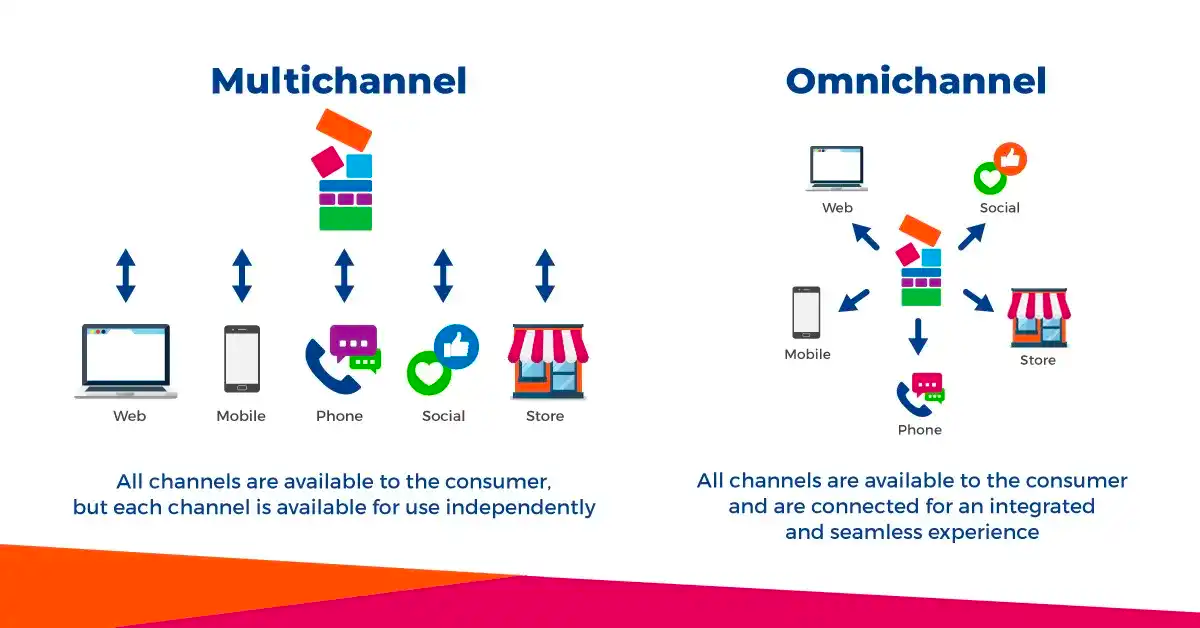
Both omnichannel and multichannel ecommerce are terms used interchangeably. They are similar but somewhat different when it comes to strategy. As the name suggests, multichannel ecommerce involves the use of multiple marketing channels to reach a potential customer. Marketers may use each channel differently, so tailored, relevant messages are not guaranteed. An example would be a business promoting an online sale — they use their social channels to cross-post the promotion, but what you see on their social media pages doesn’t look much different than what you’d read in their email newsletters. On the other hand, omnichannel ecommerce focuses on personalization and delivering a better customer experience. This ensures customers can quickly and seamlessly navigate between each company touchpoint to make a single purchase. For example, Starbucks lets you pre-order drinks via its mobile app, and you can then pick up your order at the nearest physical store. Because customers are the primary focus, every message should be appropriate for each channel and relevant to exactly where the consumer is in their buyer’s journey.
Importance of an omnichannel ecommerce strategy
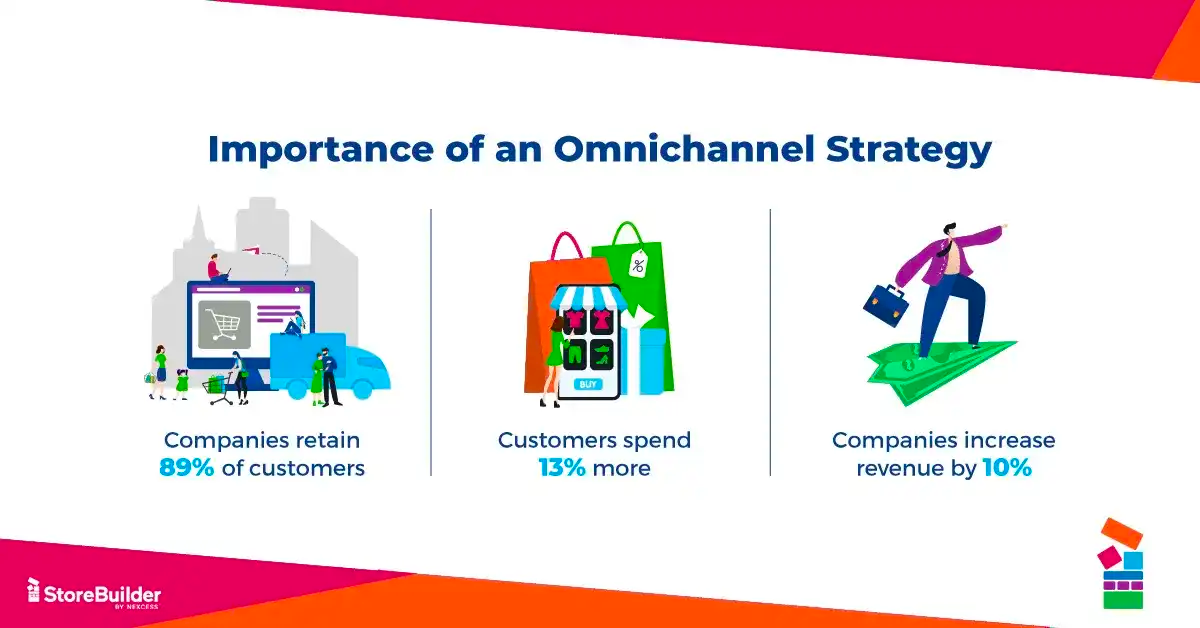
Although multichannel ecommerce is frequently practiced, truly effective rollouts can be complex. Common struggles businesses encounter are a lack of resources, investments, communication, and even support from upper management. The majority of retailers recognize that adopting an omnichannel marketing strategy is crucial for business success. These days, customers are using up to 12 channels and devices (compared to two channels 15 years ago) before purchasing something online. Adopting omnichannel marketing helps you create a consistent experience at every stage of the buyer’s journey, thus improving the likelihood of conversion and customer engagement, as well as long-term customer loyalty. Additionally, ecommerce businesses that adopt a multichannel approach observe:
- Increased customer retention: Companies with an omnichannel strategy retain 89% of their customers.
- Increased revenue: A published study saw that customers purchased 250% more frequently and spent 13% more on companies that run multichannel marketing campaigns than those with single-channel campaigns. This led to a 9.5% increase in annual revenue.
- Increased customer lifetime value: Customers who shop across channels have a 30% higher lifetime value than those who do not.
Implementing an omnichannel marketing strategy
Now that you know the difference between omnichannel and multichannel ecommerce, here’s what you can do to implement your omnichannel marketing strategy:
Be customer-centric
For your business to deliver a truly superior omnichannel experience, it must fully absorb a customer-centric view from top to bottom. Since the consumer is the focus of omnichannel ecommerce marketing, it’s essential to know your target audience. To start, use all existing customer data from your customer relationship management (CRM) software to analyze demographics, behavior, and the different channels your consumers commonly use. Leverage marketing automation tools for segmentation based on common behavior patterns. Create personalized journeys for each type of customer. Map the customer journey to determine how you want your consumers to flow across all of your touchpoints.
Find the right channels to prioritize and design
Creating an omnichannel marketing strategy doesn’t mean taking on too much by executing across every available channel. It’s ideal to choose the channels most relevant to your audience. Once you’ve decided which channels to join, you increase your chances of creating impactful experiences for your customers. Because omnichannel campaigns usually involve both offline and online communication channels, it’s crucial to design a responsive website ready for different devices.
Test and measure data
Using existing customer data, perform A/B testing on your audience segments and digital channels. Start with simple variables such as email marketing subject lines, calls-to-action (CTAs), or designs. The point of testing is to determine what message or information you’re providing is driving people to purchase. Continue analyzing the data and metrics you collect to improve your business and sales.
Create relevant content
Omnichannel marketing is about creating personalized experiences suitable for the channels you choose and not repeating the same message over multiple channels. Examine the kinds of content your customers are consuming and which part of the buyer’s journey they find most valuable. Make sure your messaging is relevant. Send it to the user on the channel they engage with the most during the most active time. For multichannel ecommerce, don’t be afraid to experiment with alternative platforms or new features such as buyable content. Your goal is to optimize the use of channels that lead consumers on a journey that drives them to make a purchase.
Final thoughts: omnichannel marketing strategies for ecommerce stores
Multichannel ecommerce businesses that adopt omnichannel marketing stay ahead of the competition by connecting with customers on their terms. Building an online store with an omnichannel strategy does not have to be daunting. By staying customer-centric, leveraging new and existing data, and continually testing in real-time, ecommerce teams can provide users with a meaningful, seamless experience that converts them into loyal customers. Choosing a reputable web host for your ecommerce store contributes to a fantastic omnichannel customer experience. By using StoreBuilder or WooCommerce Managed Hosting, you don’t have to take care of all the back end infrastructure, including hosting, security, performance, and most importantly, providing support. If you ever need help with your online store, you can connect with an expert 24/7/365 to get you online and keep you there.
Additional resources
An overview of omnichannel ecommerce →
Reach customers across channels with an omnichannel ecommerce marketing approach.
How to understand and set up multi-channel attribution and reporting →
Use multi-channel attribution to track ecommerce performance.
5 best multi-store ecommerce platforms →
Find the best multi-store ecommerce platforms to manage multiple storefronts.
