
 Liquid Web
 Are you a small business owner weighing different data storage options?
Cloud computing or private cloud services have probably come up a lot in your research, and for good reason.
Private cloud offers many benefits for companies of all sizes, but it’s especially great for small businesses as it can help them grow without compromising their security and efficiency.
This article will provide everything you need to decide if cloud computing is the right choice for your business.
By the end, you’ll have the knowledge to start this transition for your company.
An introduction to cloud computing
Cloud computing is when businesses process, manage, and store data through internet-based services, as opposed to storing them locally.
Here are some key characteristics of cloud computing that make it a powerful tool for businesses:
- On-demand self-service: Services such as server time, network storage, and software applications are instantly available as needed, without any need for human interaction with service providers.
- Resource pooling: The provider’s computing resources are pooled to cater to multiple users, with physical and virtual resources dynamically allocated and adjusted based on user demand.
- Scalability and elasticity: Business cloud services are highly adaptable, allowing companies to quickly scale up or down as needed.
- Pay-per-use pricing structures: Unlike traditional fixed-price models, cloud computing offers a flexible pay-as-you-go pricing structure that ensures businesses only pay for the services and resources they use, optimizing expenditures.
- Measured service: Cloud systems automatically control and optimize resource use, leveraging metering capabilities to ensure resources are effectively utilized.
- Resilience and availability: Most cloud providers aim for high levels of availability to ensure constant accessibility and compensate with service credits – that is, reimbursements for service outages – should they fall short of uptime guarantees.
- Security: Recognizing the critical importance of data integrity, leading cloud providers to implement stringent security protocols to guard against potential threats, thereby offering businesses a higher level of data protection and security.
For small businesses, cloud computing not only offers cost-effective access to premium technology and resources but also delivers operational advantages. With access to cutting-edge technology, small businesses can effectively compete against larger corporations that have far more resources.
Types of cloud infrastructure
The three primary types of cloud infrastructure environments are:
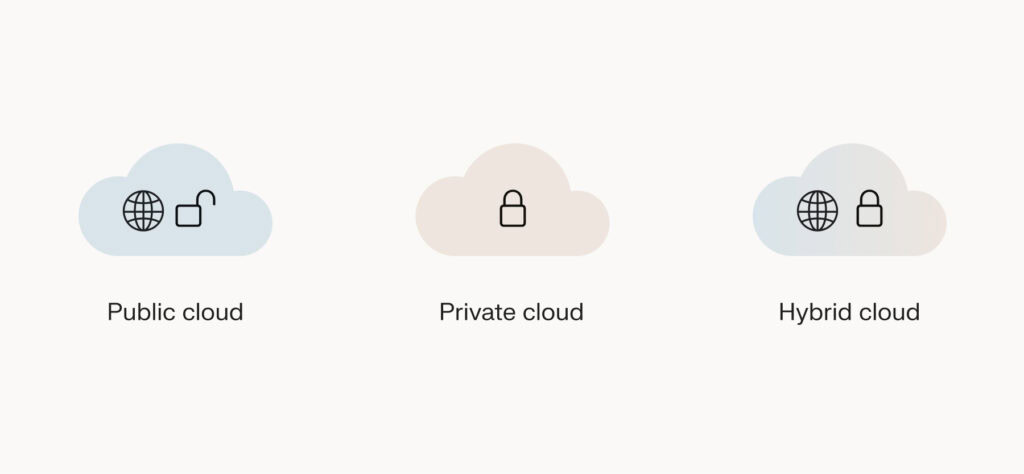
- Public cloud: Services in a public cloud are delivered over the Internet from a third-party provider. These services include applications, storage, and servers.
- Private cloud: A private cloud is used exclusively by a single organization. As such, it offers more control and can be managed internally or by a third party. It may be hosted on-site for tighter security control or off-site for added convenience.
- Hybrid cloud: By combining the strengths of public and private clouds, hybrid clouds offer the flexibility of moving workloads between cloud solutions as and when business needs and costs vary.
Cloud computing enables businesses to process, manage, and store data through internet-based services instead of local storage.
Exploring the benefits of private cloud for small businesses
Increased security
Security is a primary concern for all businesses, especially small enterprises that often struggle to invest in high-end security measures. With private cloud infrastructure, you maintain complete control over your data and server configuration. This ensures a fortified shield against malicious attacks.
Private cloud storage providers stand apart by offering dedicated firewalls, cloud backup services, robust intrusion detection systems, and advanced data encryption methods that secure data from potential threats and cyberattacks.
Scalability
The true power of private cloud lies in its scalability. Growth isn’t always predictable, so it’s important to be able to easily scale up your server resources to handle increased load and then scale back down once the demand lessens.
This pay-as-you-use model suits small businesses with limited budgets, ensuring you never pay for more than you need.
High performance and reliability
Smooth and continuous operations are one of the most important building blocks of successful small businesses. Your IT infrastructure’s performance and reliability are vital in providing unbeatable user experiences, which in turn boost customer satisfaction and retention.
Look for a provider that guarantees a high uptime so your business can run seamlessly without any worries about downtime.
Fully managed hosting services: Let the experts handle it
As a business owner, you wear many hats, so adding the responsibility of managing IT infrastructure might be too much. This is where fully managed hosting services prove beneficial.
In a fully managed hosting environment, services like regular maintenance, updates, security monitoring, and support are handled by the providers. This means that you can focus on your core business operations, driving toward success without tech-related distractions.
Understanding the costs and risks of cloud services
Are you considering cloud services for your small business but are unsure of the potential costs and risks involved? That’s completely normal.
After all, this industry is developing faster than almost anything else. In fact, industry forecasts suggest that by 2026, cloud and shared infrastructure spending will account for almost half of all enterprise infrastructure spending.
Rapid growth is also expected for True Private Cloud (both on-premise and hosted together), which is predicted to skyrocket from $7B in 2015 to a staggering $201B in 2026.
However, everything comes at a price, and cloud computing is no exception.
Maybe you’re worried about hidden costs sneaking up on you or being locked into a single vendor. Or the thought of experiencing downtime during migration sends cold shivers down your spine.
All of these fears might tempt you to try out cheap or even free cloud hosting solutions, but they often come wrapped in hidden costs and limited scalability. They might even lack essential features and reliable support, inevitably leading to headaches and expenses down the line.
This is where a dependable, transparent provider like Liquid Web can help. Known for exceptional commitment to customer service and cost-effective cloud solutions, Liquid Web addresses these concerns head-on.
Cost comparison: On-premises data center vs. private cloud hosting
Before you commit to a hosting solution, it’s imperative to understand the associated costs, advantages, and disadvantages. Here’s a brief comparison of maintaining an on-premises data center versus opting for cloud-based hosting:
| On-premises data center | Private cloud | |
|---|---|---|
| Initial capital expenses (CapEx) | Hardware, facilities, and software licenses | New software purchases, training sessions, potential downtime, and investing in a robust internet connection |
| Operating expenses (OpEx) | Staff wages, power and cooling costs, maintenance and upgrades, and disaster recovery fees | Cloud provider service fees, necessary staff for management, governance, and optimization of cloud resources |
| Advantages | Total control Customization Reliable performance | Scalability Lower maintenance costs Reduced physical footprint Managed maintenance Built-in disaster recovery by virtue of the cloud infrastructure |
| Disadvantages | High initial costs Complex IT management Expensive and time-consuming scalability Potential issues with aging hardware | Perceived lack of control compared to on-premises options Potential vendor lock-in |
To avoid unnecessary spending and optimize your resources when transitioning to the cloud, you need a well-planned strategy. Making the shift to a private cloud gets rid of the capital expenses that go into maintaining physical hardware and introduces regular operating expenses such as service fees. It’s essential to look for providers that offer scalable solutions. That way, you pay only for what you need and enjoy a great return on investment.
Liquid Web is ready to guide you every step of the way, helping you navigate the perceived challenges of migrating to the cloud. Liquid Web’s experienced team can help you minimize costs and ensure a smooth transition. In many cases, you can even take advantage of a free migration.
How to choose the right private cloud provider for your small business
Currently, there are multiple private cloud providers available, so it can be challenging to find the ideal fit for your business. Some of the most popular choices include VMware, Microsoft Azure Stack, OpenStack, and IBM Cloud Private.
Selecting the right provider will heavily depend on a variety of specific scenarios and factors:
- Your business requirements: Start with a clear understanding of your needs, including workload, scalability, security, and compliance. Determine if you need high-performance computing or storage-focused providers.
- Technical requirements: Ensure the provider integrates with your tools. Check their infrastructure performance, SLA, and uptime history.
- Management and support: Evaluate how user-friendly the cloud environment is. Strong customer service and a supportive community are key.
- Security measures: Review the provider’s security to ensure it meets your data protection and regulatory requirements.
- Associated costs: Understand the provider’s pricing structure and total cost of ownership. Look for a balance of cost and features.
- Disaster recovery and redundancy: Ensure the provider has solid disaster recovery plans and redundancy to maintain service during failures.
- Customer feedback and testimonials: Consider existing customer feedback. Reviews highlight the provider’s reliability, responsiveness, and service quality.
Why Liquid Web is the ideal solution for your small business
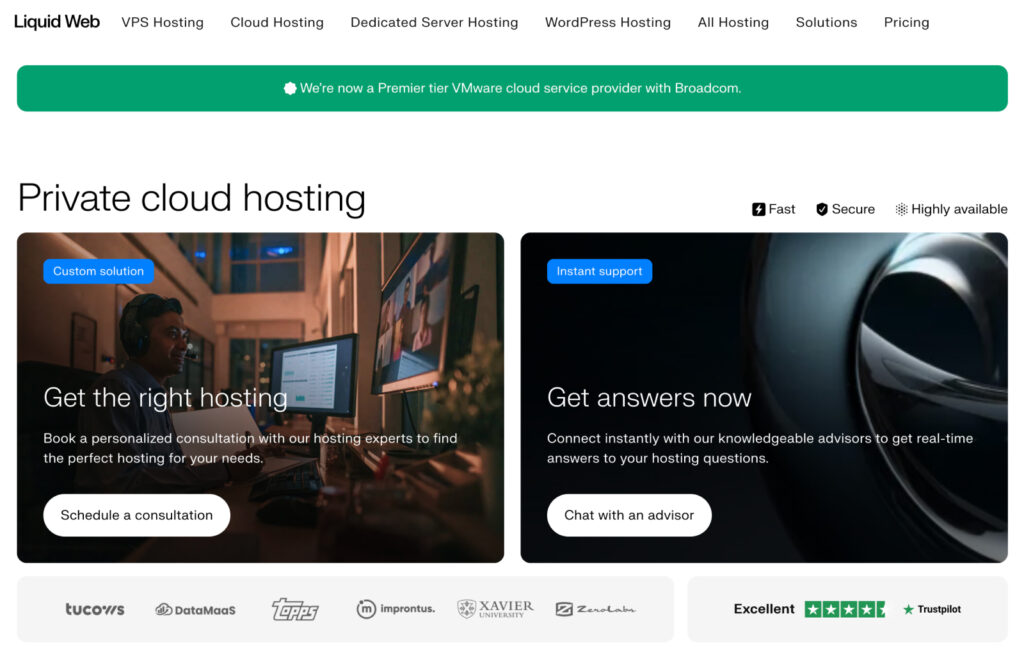
Liquid Web is a provider that not only offers robust web hosting, VPS hosting, and managed cloud services but also crafts personalized experiences with an affinity for the nuanced requirements of small businesses.
Liquid Web’s commitment to quality and value can become a powerful ally in your business’s growth trajectory:
- Navigate your cloud environment effortlessly: Liquid Web’s experts help small businesses avoid VMware complexities and stay creative.
- Choose your privacy level: Liquid Web offers private or shared cloud options to suit your budget and security needs.
- Redundant, high-performance hardware: Your business-critical workflows continue running smoothly with automatic failover, thanks to Liquid Web’s high-performance, redundant hardware infrastructure.
- High-performance networking and cloud storage space: Enjoy seamless connectivity and vast storage options with Liquid Web’s superior cloud infrastructure.
- Security at its best: Liquid Web’s robust security measures include a secure firewall, DDoS protection, and optional Acronis backups.
- Control you expenses: Operating virtually with Liquid Web cuts infrastructure costs and avoids large upfront investments for small businesses.
- Maximized productivity for key applications: Liquid Web’s optimized hosting environment boosts productivity for SaaS, ERP, and other key business applications.
Changing to a cloud environment is a critical moment for any small business. Liquid Web understands this and strives to ease the process with transparent pricing and complementary, hassle-free migrations.
With our assistance, the obstacles and fears of adopting new technology become manageable, ensuring security, relentless support, and adaptable solutions that adjust to the unique demands of small businesses.
As a testament to Liquid Web’s commitment to excellence, the services come with a 99.99% uptime guarantee. Rest assured, your digital operations will run as smoothly as ever, which is crucial for maintaining customer trust and growing your business.
Take the next step: Migrate your business to the cloud with Liquid Web
By now, you should have a better idea of the benefits of cloud computing for small businesses and, most importantly, the critical role trusted cloud service providers play in this process.
Remember, a seamless transition to the cloud requires a well-thought-out strategy, taking into account choosing the right provider that meets your unique business needs.
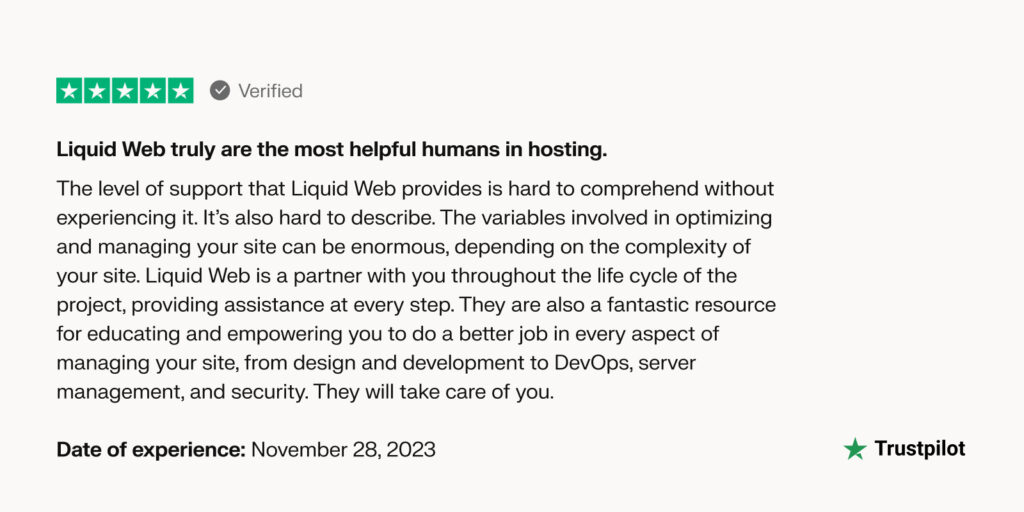
Rated as excellent on Trustpilot with over 1,000 reviews, Liquid Web is an ideal choice for small businesses seeking to transition to the cloud.
It’s time for your small business to harness the transformative power of private cloud computing. Get started today with Liquid Web’s VMware Private Cloud!