
 Liquid Web
 Have you ever wondered how big companies manage the fluctuating demand for Information Technology (IT) resources without breaking the bank? The secret lies in hybrid cloud management.
By skillfully balancing private and public clouds, organizations benefit from improved agility, better security, and impressive cost savings. This approach to hybrid cloud management means resources can be scaled up and down as needed while maintaining optimal performance and security.
In fact, chances are your organization is among the 72% leveraging a hybrid cloud approach. However, without effective management, you could be missing out on the full range of benefits a hybrid cloud environment can deliver.
To make the most of it, you’ll need a deep understanding of the interplay between management, security, and governance, all of which we’ve covered in this guide. By the time you finish reading this article, you’ll have a better grasp of best practices and how to manage your hybrid cloud environment.
Key points
- Effective hybrid cloud management ensures smooth operations, data portability, and application interoperability across different cloud platforms.
- Key challenges in hybrid cloud environments include security, governance, and workload management.
- Best practices for successful hybrid cloud implementation involve strategic planning, choosing the right technology stack, prioritizing security and compliance, managing costs through techniques like resource tagging and automated scaling, monitoring performance, and leveraging automation and orchestration tools.
Here’s what we’ll cover:
- Why is hybrid cloud management important?
- Navigating the challenges of hybrid environments
- Best practices for successful hybrid cloud implementation and optimization
- Selecting the right hybrid cloud management tools
- Take your hybrid cloud strategy to the next level with Liquid Web
Why is hybrid cloud management important?
Effective hybrid cloud management ensures smooth operations, data portability, and application interoperability across different cloud platforms. By implementing the right management strategy, organizations can:
- Boost business agility and adapt swiftly to market changes and customer demands.
- Address critical pain points like security, compliance, and workload deployment challenges.
- Mitigate risks and ensure regulatory compliance.
- Streamline workload deployments for optimal performance.
The reasons why organizations are embracing multi-cloud approaches are clear:
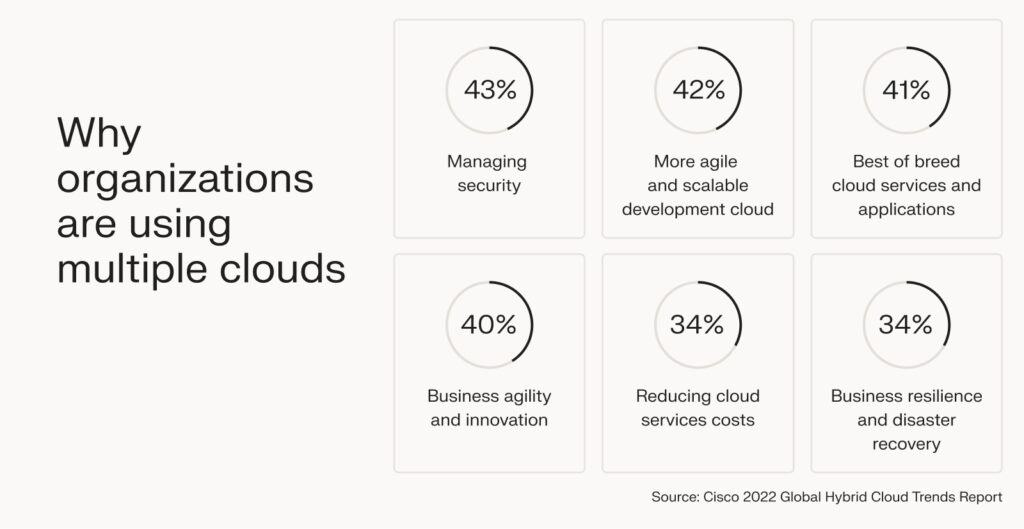
However, managing a hybrid cloud environment can be complex and time-consuming, requiring specialized expertise and tools. This is where partnering with a managed hosting provider like Liquid Web can make a difference.
Liquid Web’s hybrid cloud solutions handle these critical management tasks, providing a reliable platform for top-notch performance, data mobility, and application integration.
Navigating the challenges of hybrid environments
Hybrid environments, which combine on-premise, private cloud, and public cloud infrastructures, offer organizations flexibility and scalability. However, the complexities of hybrid environments, such as different systems, varying protocols, and multiple security models, can make management daunting.
To navigate these challenges, it’s crucial to implement a unified management strategy to maintain visibility and control across all platforms.
Tackling key pain points: security, governance, and workload management
Security
Among IT professionals, 37% say security is a significant challenge when deploying a hybrid cloud strategy.
Establishing consistent security policies, identity management, and data protection measures is essential to safeguarding your hybrid environment. In addition, you should implement end-to-end encryption, conduct regular security audits, and develop well-defined incident response plans.
However, you don’t have to tackle these challenges alone. Liquid Web’s solutions include advanced security features, such as firewalls, Secure Sockets Layer (SSL) certificates, and malware scanning, that can be integrated into your hybrid cloud.
Governance
With hybrid clouds, you’re dealing with multiple platforms, each with its own set of rules and regulations.
This complexity can make it difficult to comply with various regulations, such as the General Data Protection Regulation (GDPR) and the Health Insurance Portability and Accountability Act (HIPAA). To manage governance in a hybrid setup, create adaptable frameworks that meet compliance requirements by:
- Developing a comprehensive governance framework that covers all aspects of your hybrid environment.
- Establishing clear roles and responsibilities for governance and compliance.
- Implementing monitoring and reporting mechanisms to ensure compliance.
- Providing regular training and awareness programs for employees.
Liquid Web’s hosting solutions can support your governance and compliance efforts by providing a secure, compliant, and highly available infrastructure. Their solutions are designed to meet stringent regulatory requirements, with features like HIPAA-compliant servers, regular security audits, and disaster recovery plans that safeguard data.
Workload management
Managing and optimizing workloads across hybrid environments can be challenging. A 2022 Cisco report revealed that 33% of organizations considered operational complexity a significant concern when adopting hybrid or multi-cloud models.
To overcome this challenge, develop effective workload placement strategies that consider factors like performance, security, and cost. There are two different approaches you can leverage to streamline workload management in your hybrid environment:
- Predictive analysis: This approach involves collecting historical data on workload patterns and resource utilization. By identifying trends and employing machine learning algorithms or statistical models, you can accurately predict future demands. This data-driven strategy enables effective resource allocation, enhancing operational efficiency.
- Containerization technologies: Tools like Kubernetes simplify workload management by enabling easy deployment across various environments without compatibility issues. For example, a company can use Kubernetes to deploy an online store application that has separate containers for the product list, payment system, and user login. With Kubernetes, these containers can be easily deployed and managed on the company’s own servers as well as on a public cloud platform like Google Cloud.
Liquid Web’s hosting solutions are tailored to handle diverse workloads, offering a flexible and scalable infrastructure that adjusts to your needs.
Best practices for successful hybrid cloud implementation and optimization
Strategic planning
Having a strong foundation is crucial for hybrid cloud success:
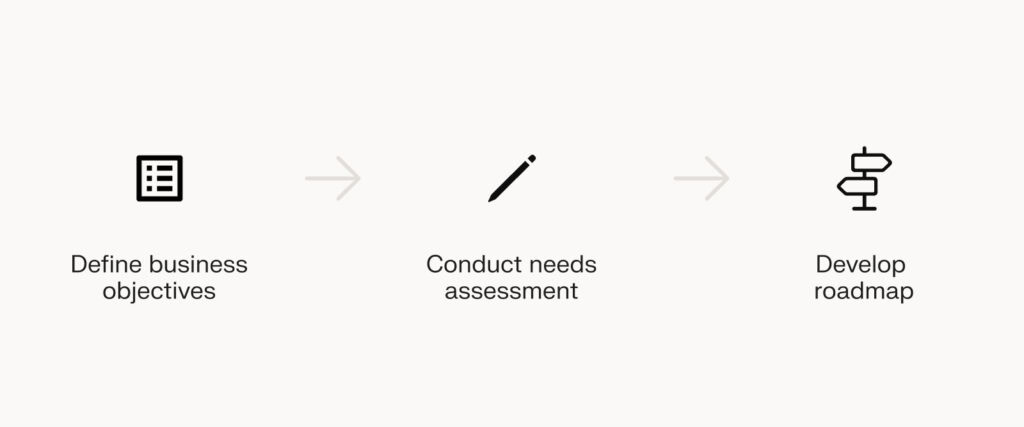
- Clearly define your business objectives when adopting a hybrid cloud strategy.
- Conduct a comprehensive needs assessment to understand your workload requirements and compliance considerations.
- Develop a well-thought-out roadmap with implementation milestones and success metrics.
Choosing the right technology stack
Selecting compatible technologies is essential for integration across on-premise, private, and public clouds.
Cloud management platforms offer centralized control, enhancing operational efficiency and compliance. These platforms provide a unified view of infrastructure, simplifying management tasks, improving security oversight, and optimizing cost control across various cloud environments.
Security and compliance
Implementing solid identity and access management, along with data encryption, helps protect sensitive information. Additionally, following industry regulations like GDPR and HIPAA is necessary for compliance.
Cost management and optimization
Resource tagging and automated scaling are two effective techniques for monitoring and optimizing expenses in a hybrid cloud environment.
Resource tagging allows you to categorize cloud assets based on factors like department, project, or initiative (also known as cost centers), providing detailed insights into your spending. This helps you identify areas for cost savings.
Automated scaling adjusts your resources based on demand. By scaling up during peak times and down during lulls, you only pay for what you need.
In addition to these techniques, cost management tools and services can provide a comprehensive view of your cloud expenditures. These tools help you track costs by service, account, or custom tags, giving you the visibility needed to make informed decisions about your budget.
Performance monitoring and optimization
Keeping a close eye on performance is key to ensuring your cloud setup runs smoothly. Continuous monitoring will help you spot any issues or bottlenecks that could slow things down.
To boost performance, focus on load balancing and resource allocation. By evenly distributing workloads across servers and managing resources effectively, you can enhance performance and keep operations running without a hitch.
Automation and orchestration
Cloud automation tools can streamline deployments, resource management, and overall operation efficiency. On the other hand, orchestration is vital in managing complex workflows across cloud environments. It helps coordinate tasks, automate processes, and ensure proper system integration.
Selecting the right hybrid cloud management tools
- Tool compatibility: Check whether the tools are compatible with your organization’s cloud infrastructure and can support public and private cloud components. Liquid Web’s cloud solutions, such as the Cloud Dedicated Server and VMware Private Cloud plans, provide resource isolation and instant provisioning, making them compatible with various tools and applications.
- Security features: Opt for tools with strong security features like identity and access management, encryption, and threat detection. Liquid Web’s suite of products offers a comprehensive security stack that includes identity and access management to control user access, asset isolation to prevent unauthorized access between resources, and next-generation cloud web application firewalls.
- Cost management: To prevent budget overruns and support cost-effective cloud management, choose tools that provide cost monitoring and optimization capabilities across different cloud platforms. Liquid Web offers several cost management tools as part of their managed hosting solutions. They also adopt an incremental pricing approach that ensures your hosting expenses grow alongside your business needs so you never face unnecessary costs.
- Support and reliability: Select tools from reliable providers with a proven track record of uptime and dependability. Liquid Web’s dedicated support team is available 24/7/365 to assist you with any issues. Additionally, they back their services with a 100% uptime guarantee, ensuring your servers and services experience uninterrupted performance at all times.
- Customization and scalability: Tools should be customizable to suit your workflows and scalable to accommodate business growth. Liquid Web offers customizable hosting solutions that cater to diverse project requirements and meet each client’s specific needs. Their products also provide a scalable infrastructure that can grow alongside businesses, offering flexibility, efficiency, and adaptability.
- Vendor expertise: Vendor expertise in hybrid cloud environments and a strong support system are crucial factors to consider when choosing the right tools. Thanks to Liquid Web’s extensive experience in hybrid cloud management and reliable support, you can count on them to effectively navigate the complexities of hybrid cloud environments.
Hybrid cloud management software
When evaluating and selecting cloud management software, it’s essential to prioritize solutions that offer automation, cost management, and security features.
These capabilities are crucial for streamlining operations, optimizing expenses, and safeguarding your cloud environment. Some of the leading Cloud Management Platform (CMP) providers include:
- VMware: VMware offers the vRealize Suite, a powerful platform for managing virtualized data centers and cloud environments. With its automation, cost management, and security features, vRealize Suite helps organizations optimize their cloud infrastructure and ensure compliance.
- Microsoft: Microsoft’s Azure Arc extends Azure management and services to any infrastructure, providing a unified control plane for managing resources across on-premise, edge, and multi-cloud environments.
- Amazon Web Services (AWS): AWS Systems Manager is a cloud management platform designed to help you efficiently manage your AWS resources. It offers automation, security, and cost management capabilities, making it easier to maintain a secure and cost-effective cloud environment.
- International Business Machines (IBM): IBM’s Multicloud Manager platform supports visibility, governance, and automation across cloud environments. IBM Multicloud Manager helps you maintain control, optimize costs, and ensure compliance by providing a centralized view of your cloud resources.
- Flexera: Flexera’s cloud management software is designed to help organizations optimize their cloud infrastructure. With features like cost management, governance, and automation, Flexera’s solutions help businesses gain visibility, control, and efficiency in their cloud operations.
- OpenStack: OpenStack is an open-source platform for cloud computing, primarily for building and managing public and private clouds. It offers a range of features, including automation, security, and cost management.
Take your hybrid cloud strategy to the next level with Liquid Web
A well-managed hybrid cloud environment is crucial for business agility, cost efficiency, and maintaining a competitive edge. Liquid Web offers hosting solutions to support and enhance your hybrid cloud strategy.
Their fully managed hosting services provide optimized, secure, and reliable solutions for virtual private servers (VPS), cloud dedicated servers, and private cloud powered by VMware. Plus, 24/7/365 support ensures that your infrastructure always runs smoothly.
Liquid Web also supports application and database management. This comprehensive approach provides an ideal environment for businesses requiring a reliable and scalable web infrastructure without direct management.
With Liquid Web’s solutions, you can effectively address common pain points associated with hybrid cloud environments, such as:
- Security concerns.
- Workload management complexities.
- Compliance challenges.
Their expertise and dedication to customer success make Liquid Web an ideal partner for businesses looking to optimize their hybrid cloud strategy. To discover how they can help you take your hybrid cloud strategy to the next level, explore Liquid Web’s product offerings today!