
 Luke Cavanagh
 Cloud-native architectures break away from the heavy, slow-moving monoliths of the past, offering a fresh, flexible way to build applications that can grow, adapt, and thrive online.
As organizations move toward these advanced architectures, the need to maximize cloud efficiency and effortlessly manage sudden traffic surges has become necessary. This article will guide you through the core principles of cloud-native architecture, offering a deep dive into the best practices and strategies that can help your business stay ahead.
Key points
- Cloud-native architectures enable businesses to build scalable, resilient applications, breaking away from traditional monolithic structures to stay competitive in a dynamic digital landscape.
- Key strategies include microservices, containerization with Docker, serverless computing, and advanced patterns like event-driven architecture and polyglot persistence, all aimed at enhancing resilience and scalability.
- Essential tools for cloud-native development include Kubernetes for container orchestration, Jenkins for CI/CD, AWS Lambda for serverless computing, and Prometheus and Grafana for monitoring and observability.
- Optimization techniques such as right-sizing resources, using CDNs, and employing Infrastructure as Code (IaC) help manage costs, improve performance, and streamline resource management in cloud environments.
- Liquid Web’s managed dedicated servers offer the flexibility, security, and performance needed to run cloud-native applications effectively, making them an excellent choice for businesses looking to elevate their cloud strategy.
Advanced strategies of cloud-native architectures
Microservices architecture
At the heart of cloud-native strategies lies microservices architecture, a shift from traditional monolithic designs. Instead of one large, intertwined application, microservices break down your app into smaller, self-sufficient services that work independently. Each microservice handles a specific function and communicates with others through well-defined APIs.
This granular approach simplifies development and allows for faster deployments, easier scalability, and more resilient applications. If one service goes down, the others keep running, minimizing downtime and disruption.
Containers
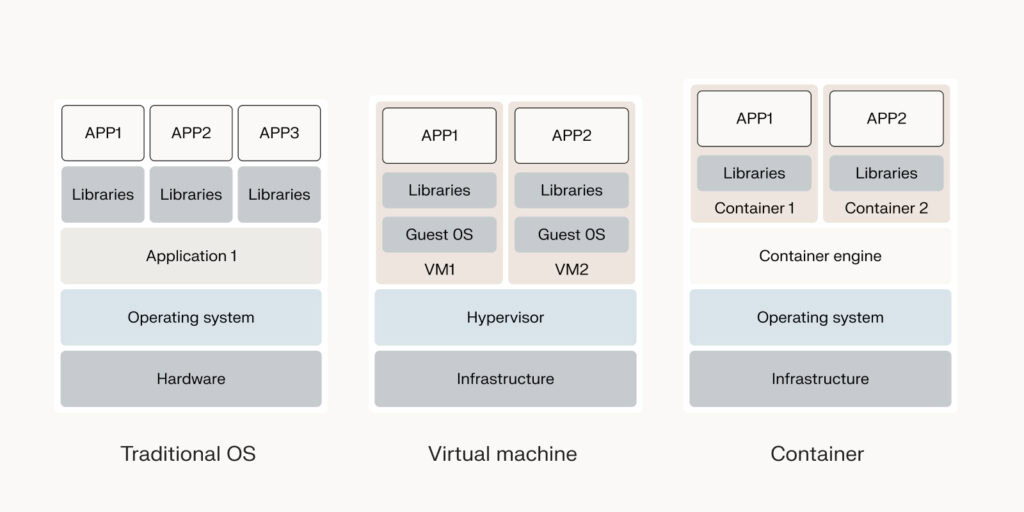
Containers wrap up your application, along with all its dependencies, into a neat, portable package that can run consistently across any environment — whether it’s on-premises, in the cloud, or somewhere in between.
This “write once, run anywhere” capability ensures that your application behaves the same, no matter where it’s deployed. Containers also make it easier to manage resources, improve security, and streamline the development process by providing a standardized environment.
Serverless computing
Serverless computing takes the concept of abstraction to the next level by removing the need for traditional server management. With serverless, you can focus purely on your code while the underlying infrastructure — provisioning, scaling, and management – is handled automatically.
This means you only pay for the compute time you use, making it a cost-effective solution for unpredictable workloads. Serverless architectures are particularly well-suited for applications with varying demands, as they can scale up or down instantaneously based on real-time needs.
Service mesh
As microservices multiply within your architecture, managing their communication becomes critical. Enter the service mesh, a dedicated infrastructure layer that handles secure, fast, and reliable communication between services.
Service meshes take care of complex tasks like load balancing, service discovery, and encryption, freeing up your development team to focus on building features instead of managing network complexities. This results in more efficient, scalable, and secure microservices architectures.
API gateways
In a cloud-native environment, API gateways are your first line of defense and the command center for client requests. Acting as a single entry point, they manage the flow of requests between clients and services, handling essential tasks like routing, authentication, and rate limiting.
By centralizing these functions, API gateways simplify the management of microservices, enhance security, and ensure that your applications can handle high volumes of traffic without compromising performance.
Integration of development and operations (DevOps and CI/CD):
Cloud-native architectures thrive on the smooth integration of development and operations — DevOps. By embracing Continuous Integration and Continuous Delivery (CI/CD) practices, teams can automate the build, test, and deployment processes, ensuring that code changes are released faster and with fewer errors.
This integration allows for rapid iteration, continuous feedback, and a more agile approach to software development. With CI/CD, businesses can deliver new features and updates to users quickly and consistently, maintaining a competitive edge in the market.
Differentiating cloud-native architecture from traditional approaches
When it comes to application development, the choice between monolithic and cloud-native architectures is essential. Monolithic architectures, where an entire application is built as a single, cohesive unit, work well for simpler applications with stable requirements. Here’s a comparison.
| Aspect | Monolithic architecture | Cloud-native architecture |
| Architecture approach | Single, cohesive unit. | Modular, microservices-based. |
| Scalability | Limited scalability, struggles with high demand. | Highly scalable, handles high demand efficiently. |
| Agility | Less agile, difficult to adapt to changes. | Highly agile, easily adapts to changes. |
| Resilience | Low resilience, single point of failure. | High resilience, fault-tolerant design. |
Designing resilient microservices architecture for cloud-native environments
Resilience is the name of the game for building a microservices architecture. In a cloud-native environment, resilience means your system can withstand failures and continue operating smoothly, even when things go wrong. Among the key concepts of resilience are:
- Fault tolerance and graceful degradation: Fault tolerance ensures that your system can keep running even if part of it fails, while graceful degradation is the art of maintaining essential functionality even when some services are down. Instead of crashing entirely, your application might offer limited features until full service is restored.
- Redundancy for high availability: Redundancy is about having backups. By duplicating critical components, your system can switch to a backup if the primary one fails, ensuring that your services remain available with minimal disruption.
You must also apply the right patterns to keep your system strong and steady. Here are some of the most popular patterns:
- Circuit breaker: Imagine you’re making requests to a service that starts to fail. Instead of continuing to send requests and overloading the system, the circuit breaker pattern steps in, halting requests to the failing service and preventing a cascade of failures across your application.
- Bulkhead pattern: Bulkheads in ships compartmentalize sections to prevent flooding from sinking the whole vessel. Similarly, the bulkhead pattern isolates different parts of your system, so if one component fails, the rest can keep functioning without being dragged down.
- Retry mechanism with exponential backoff: When a service fails, sometimes the solution is as simple as trying again. But rather than retrying immediately, which can cause more issues, the retry mechanism with exponential backoff waits progressively longer between each retry, giving the system time to recover.
- Event-driven architecture: In an event-driven architecture, your applications respond to events in real-time, enabling asynchronous communication and instant processing. This pattern is particularly useful for systems that need to react quickly to changes or handle high volumes of data.
- Polyglot persistence: Different components of your system might have different data storage needs. Polyglot persistence involves using multiple types of databases, each suited to specific requirements, ensuring optimal performance and scalability across your architecture.
- Multi-cloud and hybrid cloud: By utilizing multiple cloud providers or combining on-premises resources with cloud services, you can reduce vendor lock-in, improve reliability, and strategically distribute resources. This approach adds an extra layer of resilience by diversifying your infrastructure.
- Edge computing: Edge computing brings processing power closer to where data is generated, reducing latency and bandwidth usage. This is especially beneficial for IoT applications, real-time analytics, and experiences like augmented or virtual reality that demand near-instantaneous responses.
And to guarantee that your microservices architecture is scalable, consider implementing:
- Horizontal and vertical scaling: Horizontal scaling means adding more instances of a service to distribute the load, while vertical scaling involves beefing up the existing instances with more resources. Cloud-native architectures typically favor horizontal scaling for better flexibility and resilience.
- Auto-scaling: Auto-scaling automatically adjusts the number of running instances based on demand, ensuring your application can handle traffic spikes without breaking a sweat.
- Load balancing: Load balancing spreads traffic across multiple servers, preventing any single server from becoming a bottleneck.
Expert insights for cloud optimization
To truly optimize your cloud-native architecture, here are expert strategies for cost management, performance, and resource management.
Cost management
- Right-sizing resources: Over-provisioning can lead to wasted resources and inflated costs. Choose the right instance types that match your workload’s requirements, ensuring you’re not paying for more than you need.
- Autoscaling for cost efficiency: Autoscaling isn’t just about performance; it’s also a cost-saver. By scaling resources up during peak times and down during lulls, you only pay for what you actually use, optimizing your cloud spending.
Performance optimization
- Use Content Delivery Networks (CDNs): CDNs cache and distribute your content across a global network of servers, bringing it closer to users and reducing load times. This improves the user experience and lightens the load on your servers.
- Optimize application code: Performance bottlenecks can drag down your application. Regularly profile your code to identify and optimize inefficient paths. Reducing unnecessary API calls and streamlining data transfers can significantly cut down on latency.
Resource management
- Infrastructure as Code (IaC): Tools like Terraform or AWS CloudFormation allow you to define and manage your infrastructure through code, ensuring consistency, reducing manual errors, and enabling easier scaling and modification.
- Function-as-a-Service (FaaS): Serverless computing, like AWS Lambda or Azure Functions, enables you to run functions on demand without worrying about server management. This model scales automatically with usage, reducing overhead and ensuring you’re only using resources when necessary.
Essential tools and technologies for cloud-native development
Simplifying microservices implementation with containerization
Containerization is at the core of cloud-native development, and Docker stands out as a key player in this space. Docker revolutionizes how we build, deploy, and manage applications by packaging them, along with their dependencies, into isolated containers.
By encapsulating everything your application needs — libraries, binaries, configuration files — Docker makes deploying microservices easier, more reliable, and predictable. The result? A smoother development process with fewer surprises when it comes to deployment.
Container orchestration
Managing containers at scale requires a more sophisticated approach. Enter container orchestration platforms such as:
Kubernetes
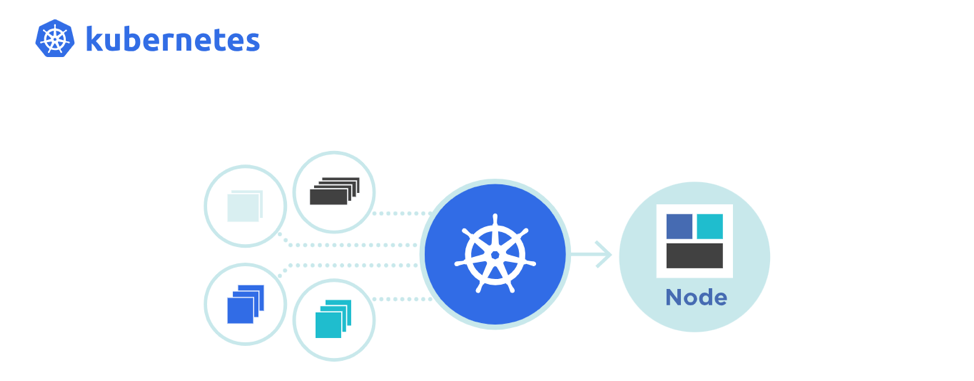
When dealing with large, complex applications that demand advanced features, scalability, and high availability, Kubernetes is the go-to solution. It provides robust management and flexibility, making it ideal for enterprise environments. With Kubernetes, you can automate the deployment, scaling, and operation of containerized applications, offering detailed control and customization to meet the needs of intricate cloud-native systems.
Docker Swarm
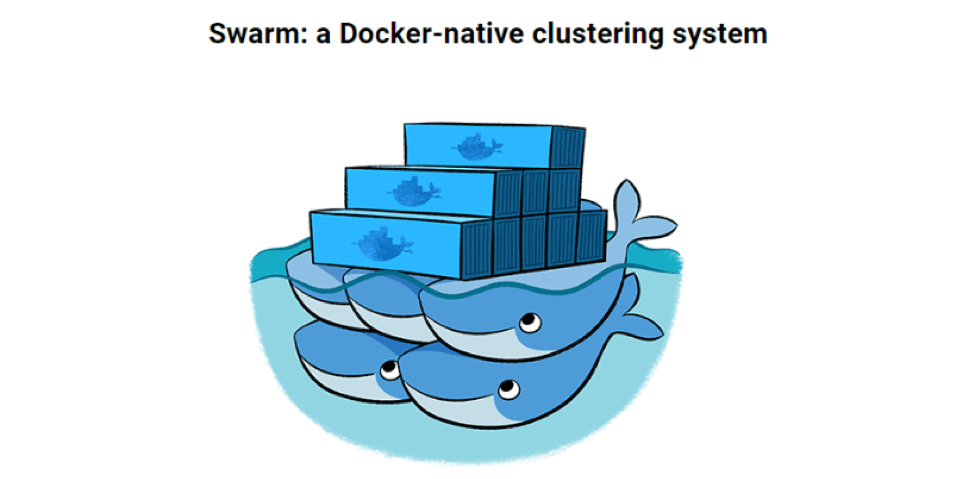
For simpler, smaller applications, Docker Swarm offers a more straightforward orchestration solution. It integrates seamlessly with existing Docker workflows and is designed for ease of use and quick setup. While it lacks some of the advanced features of Kubernetes, Docker Swarm excels in environments where simplicity and speed are prioritized, making it a great choice for smaller projects or teams looking to avoid the overhead of Kubernetes.
DevOps tools
DevOps tools are essential for continuous integration and delivery (CI/CD) that cloud-native environments thrive on. Here are two must-have tools in the DevOps toolkit:
Jenkins
Jenkins is an open-source automation server that has become a cornerstone in the CI/CD world. Its vast array of plugins allows it to adapt to various project requirements, making it highly extensible. Whether you’re building, testing, or deploying applications, Jenkins provides a flexible and powerful platform to automate these processes, helping teams to release faster and with greater confidence.
GitLab CI/CD
Integrated directly into the GitLab platform, GitLab CI/CD offers a seamless experience for managing code repositories and automation processes. It simplifies the CI/CD pipeline, allowing developers to manage everything from a single interface. This integration makes it easier to maintain a streamlined workflow, from code commits to production deployments.
Serverless platforms
Serverless computing represents a shift in how we think about infrastructure. With serverless platforms, you can focus on writing code without worrying about provisioning or managing servers. Here’s how the leading serverless platforms stack up.
AWS Lambda
Amazon’s AWS Lambda allows you to run code in response to various events without the need to manage servers. It automatically scales applications by running code in response to triggers, such as HTTP requests or changes in Amazon S3 buckets. This on-demand execution model is perfect for workloads with unpredictable traffic, where paying only for the compute time you use can lead to significant cost savings.
Azure Functions
Microsoft’s Azure Functions provides a robust platform for running event-driven, stateless code functions. It’s designed to handle complex orchestrations and integrates deeply with Azure’s cloud ecosystem, making it a powerful choice for developers already using other Azure services.
Google Cloud Functions
Google Cloud Functions allows you to build scalable applications and microservices with minimal overhead. It integrates smoothly with Google Cloud’s suite of products, making it ideal for developers who are already working within the Google ecosystem.
Observability and monitoring tools
In a cloud-native environment, observability and monitoring are critical to ensuring that your applications are running smoothly and efficiently. Two tools that stand out in this space are Prometheus and Grafana.
Prometheus
Originally developed at SoundCloud, Prometheus has become a leading solution for monitoring in cloud-native environments, especially within Kubernetes-based setups. It’s an open-source toolkit designed to handle the complexities of modern distributed systems, providing robust monitoring and alerting capabilities. As part of the Cloud Native Computing Foundation (CNCF), Prometheus has become a trusted choice for developers looking to keep a close eye on their applications.
Grafana
Grafana is an open-source platform known for its powerful visualization capabilities. It allows you to create and share dashboards that pull data from various sources, including Prometheus, giving you a comprehensive view of your system’s performance. Grafana’s intuitive interface makes it easy to monitor metrics, track trends, and respond to issues in real time, making it an essential tool for any cloud-native environment.
Take your cloud strategy to the next level with Liquid Web
Businesses that fully embrace cloud-native principles position themselves to innovate more rapidly and maintain a strong competitive edge. By adopting strategies like microservices, containerization, and serverless computing, organizations can build applications that are resilient, scalable, and ready to adapt to whatever the future holds.
Liquid Web’s managed dedicated servers provide an ideal foundation for running cloud-native applications. These servers offer enhanced performance, top-tier security, and the customization capabilities that cloud-native environments require.

With managed dedicated servers, you gain the flexibility to install any software, including Docker, tailored to your specific application needs. This level of control ensures that your cloud-native applications are optimized for peak performance while maintaining the security and reliability that your business demands.
By partnering with Liquid Web, you can elevate your cloud strategy, ensuring that your applications are not just built for today but are ready to tackle the challenges of tomorrow.
Check out our managed dedicated servers to get started today.