
 Camber Clemence
 Cloud computing is pretty complex, and so is the budgeting that goes with it. But with researchers predicting cloud computing becomes a business necessity by 2028, it’s important to keep up with the change despite the hurdle of high costs.
This is where cloud cost optimization comes in. When you focus on making the most of your IT infrastructure, you can achieve competitive cloud computing results while freeing up more of your brand’s budget.
Let’s go over the nature of this budgeting approach, the best cloud cost tools to work efficiently with, and 15 optimization best practices to follow.
Key points
- Cloud cost optimization is the process of efficiently budgeting your cloud computing needs to get the most value for your spending. When you optimize your cloud resources, you keep expenditures manageable without sacrificing your performance.
- There are several approaches to cloud cost management, including tracking the right metrics, analyzing data in real time, and installing beneficial integrations that monitor costs.
- Choosing the ideal cloud cost tools will help you increase profitability and improve performance. VMware is the best cloud cost tool; access it on Liquid Web’s private cloud hosting. Alternative software options include Harness and Spot by NetApp.
In full, here’s what we’ll cover:
- What is cloud cost optimization?
- Why optimize your cloud coverage?
- Top strategies for cloud cost optimization
- The best cloud cost tools
- Final thoughts: Cloud cost optimization strategies and tools
What is cloud cost optimization?
Cloud cost optimization refers to solutions that help your business manage the costs associated with cloud computing. The goal is to obtain the cloud resources your business needs to thrive, just without spending in excess or ending up with idle resources. Thus, most approaches involve tracking usage data, analyzing spending, and adjusting accordingly.
According to EY, 35 percent of business professionals reported that the cost of infrastructure, including cloud technology, is their biggest obstacle to transforming their business. One reason is that decision-making about cloud computing is often decentralized, which makes it difficult to track the costs.
A lack of strategy and oversight can create spikes in cost, unused resources, and poor performance. Without a cloud cost monitoring strategy in place, your staff could easily rack up a bill, unaware of the total expenses across the company.
It’s helpful to get ahead of expenses by understanding the hidden costs of cloud computing before your project starts. For many, it’s not until after services are initiated that cost becomes a concern. Furthermore, if you chose your cloud provider a few years ago and your company has grown significantly since then, it’s likely your overall cloud needs have changed as well.
There’s an easy way out to immediately save on cloud computing: Scaling back or even eliminating resources. However, long-term cloud cost optimization will yield much larger savings over the course of years — and give your business more resources to thrive with.
The right move is to set up best practices now so that your business capitalizes on cloud computing but does so efficiently.
Why optimize your cloud coverage?
Now that we’ve summed up what optimization entails, let’s get into how it benefits your business. It’s not just about cutting unused resources; there are several benefits to optimizing your cloud coverage.
1. Decreased costs
Cost reduction — in other words, freeing up your budget — is typically the main motivation for cloud cost optimization.
A proactive approach to your cloud computing budget enables you to take advantage of cost-saving opportunities such as advance payments or volume discounts. When your cloud bill goes down, you can funnel the savings back into your budget and improve your IT operations or redirect cash flow to a different effort.
2. Predictability
It’s stress-inducing to get surprised by a sudden increase in expenses. In contrast, when you forecast and plan for cloud computing costs, you have peace of mind when the bill comes. Furthermore, you can plan to do more with your budget, confident that you won’t exceed it.
As you’ll see in this guide, there are cloud cost tools to help you determine how much you’re spending and where you can reduce costs. You can also see if a different pricing model would help you create more stable expenses from month to month.
3. Efficiency
Inefficient resource usage leads to waste. To remedy that, take advantage of load balancing, automatic scaling, or on-demand scaling — they’re mechanisms that monitor your cloud computing usage and then add or subtract capacity. When you avoid excess and insufficiency, you can confirm that your expenses actually benefit you.
4. Performance
If your current cloud computing services aren’t specialized to fit your business needs, it can lead to underperformance and overspending.
By carefully examining your needs, having a cloud cost optimization strategy in place, and choosing your provider accordingly, you’ll increase your spend efficiency because everything you’re paying for is highly tailored to be beneficial to your business.
5. Visibility
If you’re going to manage cloud spending, you’ll need clear visibility into how your organization builds, uses, and manages the cloud environment.
Increased visibility doesn’t just serve your business when it comes to cloud cost optimization; it also positively impacts other areas of cloud usage, like security.
Top strategies for cloud cost optimization
Creating a cloud cost optimization strategy is proven to help, but it requires the right tactics. The following best practices will help you understand your cloud operations and spending habits.
1. Cloud monitoring
Carefully monitoring key metrics in your cloud environment will earn you insights into the health and upkeep of your IT infrastructure. In order to thoroughly monitor your cloud environment, pay attention to each component, including:
- Cloud databases and servers.
- Applications and websites.
- Containers and hypervisors.
- Code repositories.
Keeping track of your usage and performance in these aspects allows you to compare them to your cloud spend and evaluate which costs are currently worth it.
2. Budget alignment
Your cloud budget needs to be realistic, especially regarding what your current needs are. Additionally, try forecasting what you’re likely to need in the next few years.
Remember, creating a budget is a conversation best had with product leaders, engineering leaders, and executives.
Ensure everyone understands the spending goals related to their projects, as it’s mission-critical to execute your cloud cost optimization strategy.
3. Cost as a metric
Cost should be a performance metric within your organization, which also means making cloud costs easy to understand.
Your cost metrics should be measurable, relevant, and clearly defined. Go deeper by outlining which associated expenses are notable and which are insignificant.
For starter metrics, try using the average cost per sale or the percentage of your overall business expenses.
4. Right data, right people, right time
While measuring performance is useful, there’s no need to pore over metrics and data that won’t actually impact your cloud cost.
As you deliver data to different teams, organize it according to the most relevant data points for each group. Your finance team and your engineering team will each tackle different questions with the data. The idea is to get the most impactful data to the most relevant people at the most convenient time.
5. Optimize cloud costs with data
At times, expenses become a concern only after the project is underway. Ideally, cost optimization is something you consider throughout the development lifecycle. Here’s how to weave it into each step:
- Planning: Cost data should inform your budget and roadmap. This gives you the best starting point to gradually optimize.
- Deployment: As each part of the project is deployed and watched closely, unexpected spending should be quickly identified and adjusted.
- Designing and building: Equip your teams with readily available tracking to report on their spending goals and unit costs. This awareness will help them make cost-effective choices.
- Monitoring: Periodically assess the expenses of each team, feature, and product. When you evaluate the benefits and results compared to the costs, you can better allocate your budget.
6. Real-time analytics
It’s frustrating to discover opportunities for cloud cost optimization only after receiving a pricey invoice. With real-time analytics, you can observe your cloud environment, immediately identify cost trends, and take action.
Your preferred optimization tools should provide data constantly so you can make adjustments as soon as you’re aware of an issue.
7. Rightsize resources
Imagine you’re monitoring your cloud environment, and you realize it’s currently using all of your available CPU. Plus, your server’s response time is slower than expected in nearby cities. You may need to rightsize your resources, which simply means expanding or decreasing them to the optimal size for your usage levels.
Every business has unique usage levels that shift over time, so there’s no one-size-fits-all approach to resource allocation. That’s why rightsizing is an important skill that not only improves your server’s performance but reduces costs and cloud waste. Practice this by consistently reviewing and modifying your cloud computing resources to fit current needs.
8. Accountability
Hold your engineers accountable if you expect them to save money. Since engineering projects typically create the bulk of cloud costs, it’s important to ensure you’re involving your engineering team in budget discussions.
Still, engineers aren’t your only cost stakeholders. You should also include:
- IT managers and directors.
- Department heads.
- C-suite officers.
9. Quick scaling
Manual processes take time and energy that your business could need elsewhere. That’s where autoscaling and on-demand scalability come in. Modern cloud providers can rapidly scale your computing resources up or down as your business requires more or less usage.
10. Know what you’re paying for
Review how your provider calculates your cloud costs. Some hosts charge a flat fee per user, while others charge based on how much of each resource you use.
When you understand how your bill is organized, you can decide whether it’s working for your budget — and whether another pricing model, cloud setup, or provider would work better.
11. Look for customization
Cloud cost optimization is a unique challenge that involves matching your organization’s goals with its technological needs.
Larger companies typically need more customized approaches to facilitate more moving parts and a greater demand for resources. This is why enterprise hosting is built to handle high traffic, scale quickly, and accommodate a bespoke tech stack.
12. Watch for irregularities
Keep an eye out for unexpected changes in your bill. If traffic suddenly spikes, say around the holiday season, quickly assess where your data usage went up and how you’ll budget for it next time.
If you run into unexplainable cost anomalies, promptly work with your provider to figure out where the changes are coming from. Then, you can address them by working on your resource utilization or making changes to your billing structure if needed.
13. Go for predictable pricing
Some service providers create complicated fee structures based on multiple types of usage, traffic sources, monthly fees, and hidden costs.
As you look for a cloud provider, prioritize those with a simple billing structure, like charging based on the total resources you use for your cloud platform.
14. Look for cloud-native software
While many of the programs your company uses were designed to work on desktop computers, some don’t function as well in a cloud environment. In contrast, there’s an ever-increasing library of software developed specifically to work on cloud networks. Consider switching some of your programs to cloud-native apps that will use resources more efficiently.
15. Continuous optimization
Finally, remember that cost monitoring isn’t “set it and forget it.” It requires a continuously fostered culture of awareness. When you make cloud cost optimization a continuous process that goes hand-in-hand with your development lifecycle, you create and maintain an efficient cloud system.
At this point, the only missing puzzle piece is which cloud cost management software to implement these best practices with.
The best cloud cost tools
In order to implement the optimization strategies recommended above, get a cloud cost tool to monitor your cloud infrastructure. Some of these tools are native to public cloud providers such as Amazon Web Services (AWS) or Microsoft Azure, and others come from third parties such as BigPanda.
Cloud cost tools tend to fit into a few categories:
Performance monitoring: Checks whether your other cloud tools and systems are working to their highest capacity.
- Security monitoring: Watches for threats such as malware and intrusion. Keeping your infrastructure safe prevents breaches that require spending to recover.
- Administration monitoring: Logs all users accessing your cloud infrastructure. Enables viewing a detailed track record of changes, including who made them and when.
- Cloud cost optimization: Directly recommends cost reduction opportunities based on its analysis of your spending.
Now, let’s reveal the best cloud cost management software we can recommend.
VMware private cloud
When you work with a private cloud, you’ve got your own virtual data center at your fingertips. Powered by VMware and NetApp, Liquid Web’s private cloud hosting combines the benefits of cloud computing with a streamlined experience and predictable pricing.
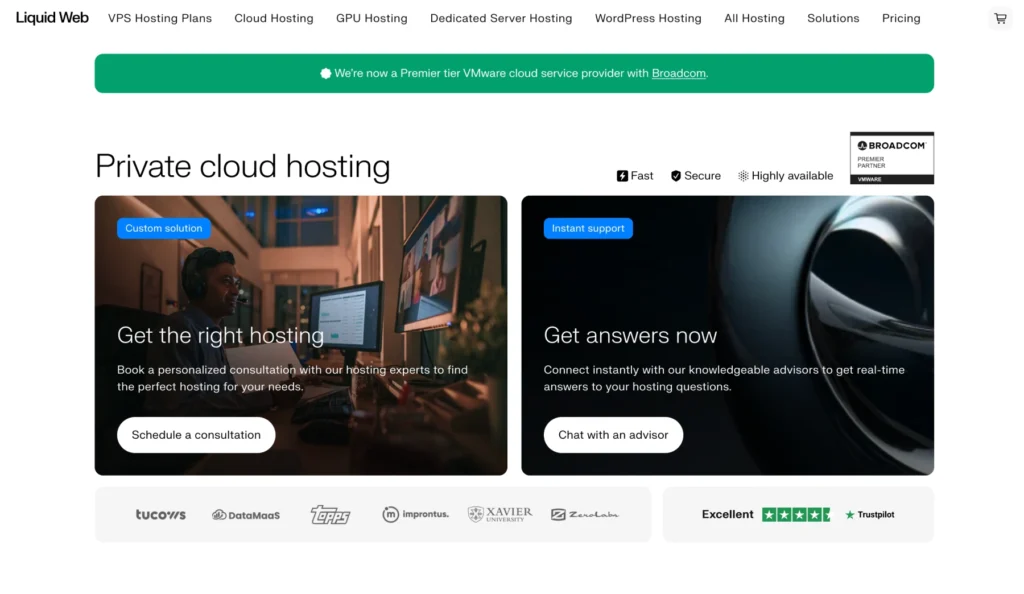
VMware makes it easy to monitor your performance, costs, and resource allocation — all within one control panel.
Additional cloud cost management tools
In addition to more holistic options like VMware, you’ll find an array of specialized monitoring tools.
For example, there’s Harness, which helps you track your Kubernetes and see which resources are used per workload.
Alternatively, Spot by NetApp focuses on FinOps, especially tracking your costs per workload against several metrics. The platform automates many of these analyses with the aim of increasing your return on investment at each step.
Final thoughts: Cloud cost optimization strategies and tools
Creating a strategy, building a cost-aware work culture, monitoring, and continuously improving your cloud cost optimization is a big undertaking. But you don’t have to do it alone.
A managed private cloud means you’re free from the technical work of configuring, managing, and maintaining your cloud infrastructure. Instead, you can focus on what your business is really about. Whether you’re considering upgrading to the cloud or you’d like to consolidate your existing cloud infrastructure to save cash, you’ll find the ideal managed solution at Liquid Web.
Private cloud is fully backed by our industry-leading team of experts who are seconds away via ticket or live chat. Learn more about our private cloud today.