

◦ Comprehensive security
◦ 24/7 support
WordPress Guide → Plugin → Gravity Forms
Gravity Forms plugin for WordPress: a complete guide

Looking for a powerful WordPress form builder that can do more than just contact forms? Gravity Forms is one of the most flexible and feature-rich options available—trusted by developers, agencies, and businesses of all sizes.
Here’s everything you need to know to get started, from installation to advanced features and must-have add-ons.
Get fast, reliable hosting for WordPress
Power your site with the industry’s fastest, most optimized WordPress hosting
What is Gravity Forms?
Gravity Forms is a premium WordPress plugin that lets you create advanced forms using a drag-and-drop interface. It’s built for flexibility, so you can use it for everything from contact forms and surveys to job applications, user registrations, quizzes, and even payment forms.
Unlike many free form builders, Gravity Forms is built with developers in mind but remains easy enough for non-coders to use. It’s especially popular with marketing teams, ecommerce sites, and service businesses that rely on lead generation or data collection.
Key features of Gravity Forms
Gravity Forms packs a long list of features, many of which are designed to save time, reduce errors, and boost conversions. Here are the key highlights:
- Drag-and-drop form builder that’s beginner-friendly but robust.
- Conditional logic to show or hide fields based on user input.
- Multi-page forms with progress indicators.
- File upload fields and advanced input validation.
- Save and continue functionality for longer forms.
- Spam prevention with Google reCAPTCHA, Akismet, and honeypot fields.
- Advanced calculations and dynamic field population options.
How to install and activate Gravity Forms
Since Gravity Forms is a premium plugin, it isn’t available in the WordPress Plugin Directory. You’ll need to install it manually after purchase:
- Go to gravityforms.com and choose a license plan.
- Log in to your account and download the plugin ZIP file.
- In your WordPress admin dashboard, go to Plugins > Add New > Upload Plugin.
- Upload the ZIP file, install, and click Activate.
- Once activated, go to Forms > Settings and enter your license key to unlock updates and add-ons.
You’ll now see a Forms menu item in the left-hand sidebar of your dashboard.
How to create your first form
Building a form in Gravity Forms takes just a few minutes:
- Click Forms > New Form and give your form a name and optional description.
- You’ll be taken to the drag-and-drop builder. From here, select the fields you want to include.
- Customize each field’s label, description, placeholder, validation rules, and whether it’s required.
- Reorder fields by dragging them into place.
- Click Save Form when you’re done.
To embed the form on your site, copy the shortcode or use the dedicated Gutenberg block.
How to embed a form in posts or pages
There are multiple ways to display Gravity Forms on your site:
- Gutenberg block: Search for the “Gravity Forms” block and select the form you want to display.
- Shortcode: Use [gravityform id=”1″ title=”false” description=”false”] in any post, page, or widget.
- PHP template files: Developers can use do_shortcode() or gravity_form() directly in theme files for custom placements.
Managing form entries
Gravity Forms stores all submissions in your WordPress database by default, making it easy to view and manage responses:
- Go to Forms > Entries to view individual submissions.
- Filter or search by form, field, or date range.
- Mark entries as read, star them for follow-up, or delete them.
- Export entries to CSV for offline use or to import into a CRM or spreadsheet.
You can also set up email notifications to receive submissions directly in your inbox.
Using conditional logic and advanced settings
Conditional logic is one of Gravity Forms’ most powerful features. It lets you personalize forms based on how a user responds.
For example:
- Show a “Company Name” field only if the user selects “Business.”
- Skip a page if the user answers “No” to a qualifying question.
- Display a custom message based on a calculated field value.
You’ll find conditional logic settings inside each field’s options panel. There are also advanced settings for:
- Field visibility (admin-only, hidden, etc.)
- Dynamic field population using query strings or hooks
- Running calculations based on user input
Integrating with third-party services
Gravity Forms supports dozens of integrations through official and third-party add-ons. These extend your forms into a complete marketing and operations tool.
Popular integrations include:
- Email marketing: Mailchimp, ActiveCampaign, Campaign Monitor
- CRMs: HubSpot, Salesforce, Zoho
- Ecommerce & payment: Stripe, PayPal, Square
- Automation: Zapier, Webhooks, Make (formerly Integromat)
- Miscellaneous: Slack, Trello, Dropbox, Help Scout
Note: Some integrations require a Pro or Elite license.
Best Gravity Forms add-ons for extra functionality
Want to go beyond basic forms? These popular Gravity Forms extensions can help you do more without switching plugins.
GravityKit

Display form submissions on the frontend. Great for job boards, directories, and user dashboards.
- Frontend display of entries
- Multiple layout types (table, list, map)
- User role restrictions
Best for: displaying collected data
Starting at: $119/year
Gravity Flow
Adds automation and approval workflows to your forms.
- Drag-and-drop workflow builder
- Email-based approval/rejection
- User input and conditional steps
Best for: internal processes and approvals
Starting at: $99/year
Gravity Perks, by Gravity Wiz
A collection of 45+ mini-plugins that enhance native Gravity Forms functionality.
- Populate Anything, Preview Submission, Limit Dates
- Better UI and UX features
- Developer-friendly
Best for: users who want granular enhancements
Starting at: $59/year (core plugin + individual perks)
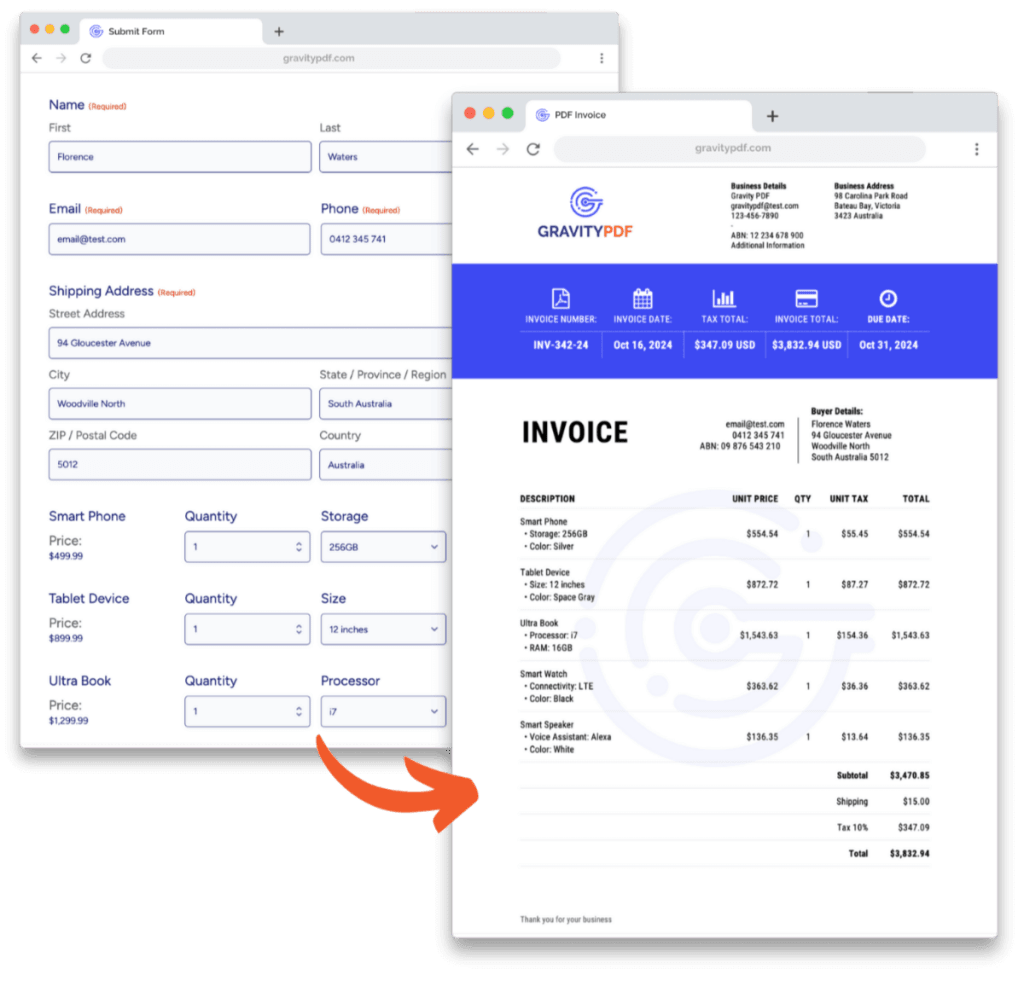
Gravity PDF

Generate downloadable PDFs automatically after form submission.
- Customizable templates
- Automatic email delivery
- Developer API for customization
Best for: generating reports, receipts, or confirmations
Starting at: Free (pro version available)
Don’t let AI break your WordPress site
We like Google’s AI Overviews and other LLM summaries as much as the next person who has to search ‘how to’ do something new. But when they cite inaccurate or outdated content, your site suffers.
Solution: Take control of your search results by adding Liquid Web as a preferred source. You’ll see our guides more readily when you search for help with your site.
Gravity Forms alternatives
While Gravity Forms is a powerful premium plugin, it’s not the only option for creating forms in WordPress. Depending on your needs and budget, you might prefer a free plugin or one that offers different integrations or design tools.
Here are some popular alternatives:
WPForms

One of the most popular drag-and-drop form builders for WordPress, with a free version available. It’s beginner-friendly and offers advanced features like conditional logic, payment integrations, and spam protection.
- Free version with core features
- Excellent UI for non-technical users
- Pro version adds marketing and ecommerce tools
Best for: beginners and small business websites
Formidable Forms

A powerful plugin designed for more advanced use cases like calculators, directories, and data-driven applications. It supports front-end views, conditional logic, and complex field types.
- Advanced calculations and logic
- Form-to-view builder for frontend displays
- Great for developers and data-heavy use
Best for: power users and developers
Ninja Forms

Flexible and modular, with a free core plugin and paid extensions. Great for sites that want to pick and pay only for the features they need.
- Free base plugin with à la carte add-ons
- Pay only for what you use
- Clean interface and Gutenberg-friendly
Best for: users who want selective upgrades
Fluent Forms

A fast-growing plugin known for its speed, UI polish, and generous free version. It includes conditional logic, multi-step forms, and integrations out of the box.
- Fast and lightweight
- Many features in the free version
- Affordable pro plans
Best for: users who want lots of functionality without paying upfront
Here’s a clean version of the Gravity Forms alternatives comparison table formatted for easy pasting into a document (Google Docs, Microsoft Word, etc.). Just copy the section below and paste it into your doc — it should retain proper spacing and alignment:
| Plugin | Free Version | Best For | Key Features | Starting Price |
|---|---|---|---|---|
| Gravity Forms | ❌ No | Developers, marketers, agencies | Conditional logic, multi-page forms, third-party integrations | $119/year |
| WPForms | ✅ Yes | Beginners and small businesses | Drag-and-drop builder, email marketing, spam protection | $99/year |
| Formidable Forms | ✅ Yes | Developers and data-heavy sites | Calculations, directories, views, advanced logic | $79/year |
| Ninja Forms | ✅ Yes | Modular upgrades, flexible pricing | Free core plugin, à la carte add-ons, Gutenberg-compatible | Free / $99/year Pro |
| Fluent Forms | ✅ Yes | Budget-conscious, fast builders | Fast UI, multi-step forms, marketing integrations | $79/year |
Frequently asked questions
Next steps for using the Gravity Forms plugin
Gravity Forms is one of the most versatile plugins you can add to your WordPress site. Whether you’re collecting leads, processing payments, or building user workflows, it’s powerful and beginner-friendly.
If you’re ready to build smarter forms, your next step is choosing the right license and exploring which add-ons match your needs.
Ready to upgrade your WordPress experience? Professional hosting improves speeds, security, and reliability for a website and a brand that people find engaging and trustworthy. Liquid Web’s WordPress hosting options configure business-class servers and support plans specifically for WordPress websites.
Don’t want to deal with server management and maintenance either? Our fully managed hosting for WordPress is the best in the industry. Our team are not only server IT experts, but WordPress hosting experts as well. Your server couldn’t be in better hands.
Click through below to explore all of our hosting for WordPress options, or chat with a WordPress expert right now to get answers and advice.
Additional resources
What is a WordPress plugin? →
A complete beginner’s guide to WordPress plugins and how to manage them
WordPress speed optimization 101 →
Learn how to use performance tuning to fix five common problems and speed up your site.
How to check if a plugin is safe →
Simple steps to evaluating a plugin before you install and activate it