


 Maddy Osman
 Cloud infrastructure will transition from a capacity enabler to a business necessity by 2028, according to Gartner. If your business depends entirely on on-premises IT infrastructure, take steps to incorporate the cloud into your technology stack.
A question arises, though: What’s the end goal? Should you go all in on the cloud, or do you still need physical servers?
Typically, it’s optimal to use a mix of dedicated physical servers (termed bare metal) and cloud environments (also known as infrastructure as a service). Still, it depends on your business needs, IT preferences, and ideal use cases. This guide will help you evaluate bare metal and infrastructure-as-a-service (IaaS) options to decide for yourself.
Here’s what we’ll cover:
- Understanding bare metal servers
- Understanding infrastructure as a service
- What are the differences between bare metal and IaaS
- How to choose between bare metal and IaaS
- Final thoughts: Exploring bare metal vs IaaS
Key points
- Bare metal servers offer exclusive access to a physical machine, ensuring streamlined performance, isolation for security, and maximum customization.
- IaaS loses a share of its resources to virtualization overhead but offers computing resources on demand via the Internet — without any need to manage physical servers.
- Both bare metal servers and IaaS have their use cases. Bare metal servers suit applications with high resource demands, while IaaS solutions suit applications with variable, shifting requirements.
Understanding bare metal servers
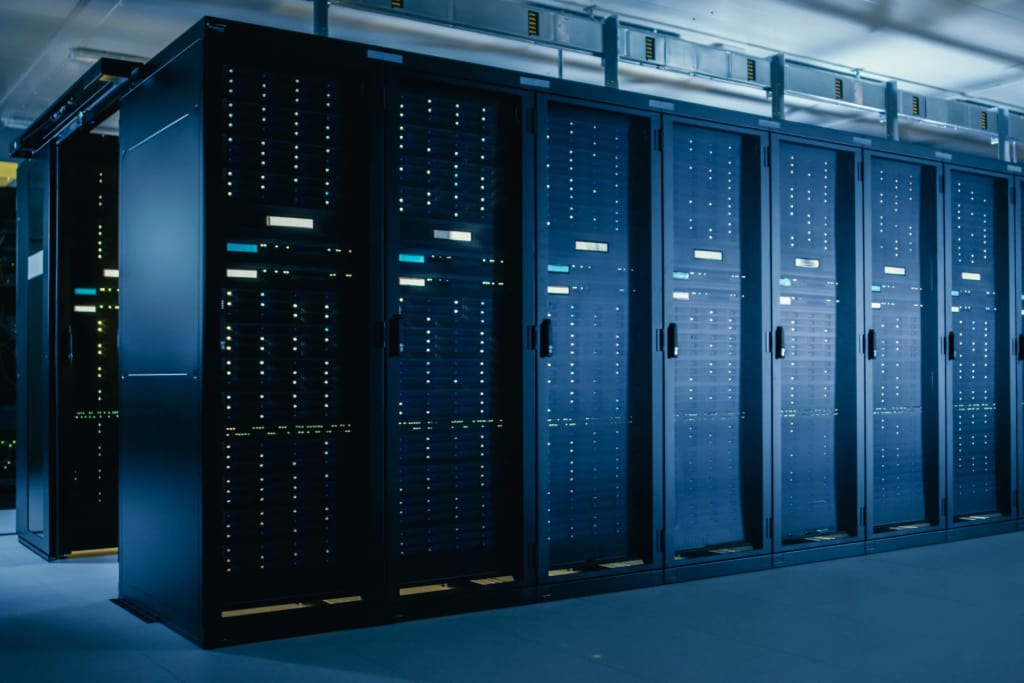
Bare metal refers to renting a physical server with exclusive access to its computing resources — the server’s CPU, RAM, storage, bandwidth, and so on. It has no virtualization layer or hypervisor taking a share of computing power.
With the entire physical server dedicated to your application, you’ll have an easier time protecting customer data and complying with relevant data security standards.
In particular, you can prove the air gap to auditors looking for isolation-based security.

Understanding infrastructure as a service
Infrastructure as a service (IaaS) is a cloud computing model. In practice, it grants you a powerful online computing environment rented from a third-party provider. For example, with Liquid Web’s VMware private cloud, you choose a fixed or variable amount of CPU, RAM, storage, and bandwidth to use in a virtual environment. You don’t have to manage the server.
Since IaaS uses virtualization, some of the server’s computing resources go toward running the backend virtualization technologies. On the other hand, without a physical server gating your resource limit, you can freely scale your IT infrastructure up or down as required to run your application seamlessly.
What are the differences between bare metal and IaaS?
Typically, bare metal and IaaS services differ in their underlying technology; IaaS uses virtualization, and a bare metal server doesn’t. Beyond that, this guide explains the smaller distinctions, including available customizations, performance capacity, isolation levels, service costs, room for scalability, and server management workload.
Let’s get into each specific factor for an in-depth comparison of bare metal and cloud IaaS services.
Technology stack

While a bare metal server is a physical machine with its dedicated resources — including RAM, CPU, and disks — an IaaS solution leverages virtualization to abstract the physical hardware of one or more physical machines.
In particular, an IaaS model is based on a Type 1 hypervisor running on multiple physical machines. The physical machines send their resources to power virtual machines (VMs).
Within seconds, you can increase or decrease the resources a virtual machine can access; the provider will simply route more resources from their bank of physical machines.
In addition to a hypervisor, an IaaS offering may include other virtualization tools for automating provisions, replicating configurations, and deploying virtual machines.
Performance capacity
While the virtualization of IaaS lets users gain on-demand resources, the virtualization technology also consumes resources. This relatively lowers the amount of available resource capacity.
In contrast, a bare metal server grants applications exclusive access to its hardware resources without any overhead or extra latency. As a result, a bare metal server will have a higher performance capacity than an IaaS solution with matching hardware.
Security isolation
As a physical server dedicated to a single user, a bare metal service offers physical isolation from other networks.
In contrast, in IaaS, virtualized resources are shared among multiple users; this is termed a multi-tenant environment. While users are isolated from others via virtualization, the environments are still physically connected. It’s one extra security opening to patch up.
Customization and control
A bare metal server is typically the premium offering of a hosting service provider, letting you take your pick of processors, RAM options, and storage drives.
With bare metal, you can opt for cutting-edge Intel Xeon processors, NVME SSDs, the latest memory disks, and anything else you need for high-performance computing workloads.
On the other hand, since an IaaS platform operates on scale and serves other tenants, it’s harder to find plans with full customization and control. Typically, you’ll make do with the default processing power of the cloud environment, which is powerful nonetheless.
Server management workload
With a bare metal server, the provider will usually handle tasks only at the data center level. You’ll need an IT team trained to manage the operating system installation, set up the software stack, and configure network settings. However, some providers do offer fully managed bare metal server solutions where you don’t need to manage anything manually.

On the flip side, an IaaS platform lets you use computing resources on the go without even involving your technical developers. The third-party cloud provider’s support team handles operating system installation, software updates, and timely security configurations.
Service costs
Typically, an IaaS provider benefits from economies of scale, so they price their cloud computing plan more affordably than a bare metal server. An IaaS host doesn’t need to offer a customized solution to each user; the host saves costs by providing a standard solution that’s adaptable.
In addition, IaaS comes with a pricing model that offers additional flexibility. Users only have to pay for the resources they consume. In contrast, bare metal servers often have fixed monthly fees you must pay to benefit from the premium offerings.
Notably, premium bare metal cloud providers like Liquid Web have started to offer consumption-based pricing for bare metal as well.
How to choose between bare metal and IaaS
Both bare metal and IaaS have their pros and cons; there’s no clear winner among the two. Instead, weigh your business requirements, in-house capabilities, and cost factors to finalize your choice. Note your ideals for performance, compliance, management, scalability, and flexibility. Then, use this guide to see whether bare metal or IaaS aligns more.
Performance requirements: Since bare metal is a dedicated server, it typically suits demanding applications, such as big data analytics, machine learning, and Kubernetes workloads. On the other hand, as a cloud service, IaaS suits applications with variable or unpredictable resource demands.
Compliance needs: With physical isolation from other networks and exclusive hardware, bare metal suits applications that need to comply with strict data security standards, such as HIPAA and PCI-DSS. While IaaS will also comply with such standards, it’ll take a bit more work to set up and convince auditors.
Management capabilities: Since an IaaS provider handles many technical tasks on their end, it suits businesses with a small IT team. Keep in mind that 95 percent of organizations lack the necessary cloud skills in their team.
Scalability and flexibility: With its on-demand resource adjustment feature, IaaS brings scalability to your IT infrastructure. On the other hand, flexibility is a perk of bare metal servers; you can go fully bespoke by picking and choosing the components you want according to your application.
Budget impact: While IaaS is known to be budget-friendly, consider the fees providers might charge for using extra services. For instance, Amazon Web Services (AWS) charges $0.08 – $0.12 per GB on data leaving its servers — which can be a major cost driver if you’re building a data platform.
Final thoughts: Exploring bare metal vs IaaS
Both bare metal and IaaS are stellar services to incorporate into your IT structure. Bare metal gives you bullseye performance, and IaaS gives you on-the-fly scalability.
That being said, whether you opt for bare metal or IaaS, the benefits you enjoy will largely depend on the bare metal hosting provider you opt for. If a provider doesn’t specialize in the computing environment you prefer, you’ll have a hard time beating your competition.
If you’re looking for a reliable hosting provider to team up with, consider Liquid Web; we offer both bare metal servers and cloud IaaS solutions. Check out our plans or contact us to get started today.