


 Liquid Web
 Enterprise Resource Planning (ERP) systems are the cornerstone for organizational success. They are the force behind many business operations, from finance and procurement to human resources and customer relations.
However, an ERP system’s true power shines when paired with the optimal hosting solution. And if you’re struggling with costly and inefficient on-premise ERP systems, you’re in the right place!
? Did you know that the ERP revenue is expected to show an annual growth rate (CAGR 2023-2028) of 4.78 percent, resulting in a market volume of $62.36 billion by 2028?
This post will shed light on the benefits of ERP hosting and arm you with the knowledge you need to choose the most suitable hosting provider that aligns with your operational needs.
Understanding ERP hosting: definition
ERP systems are a type of software used by organizations to manage day-to-day business activities such as accounting, procurement, project management, risk management and compliance, supply chain operations, and more. Their goal is to integrate these various functions into a single, coherent system, providing a centralized framework for managing business operations.
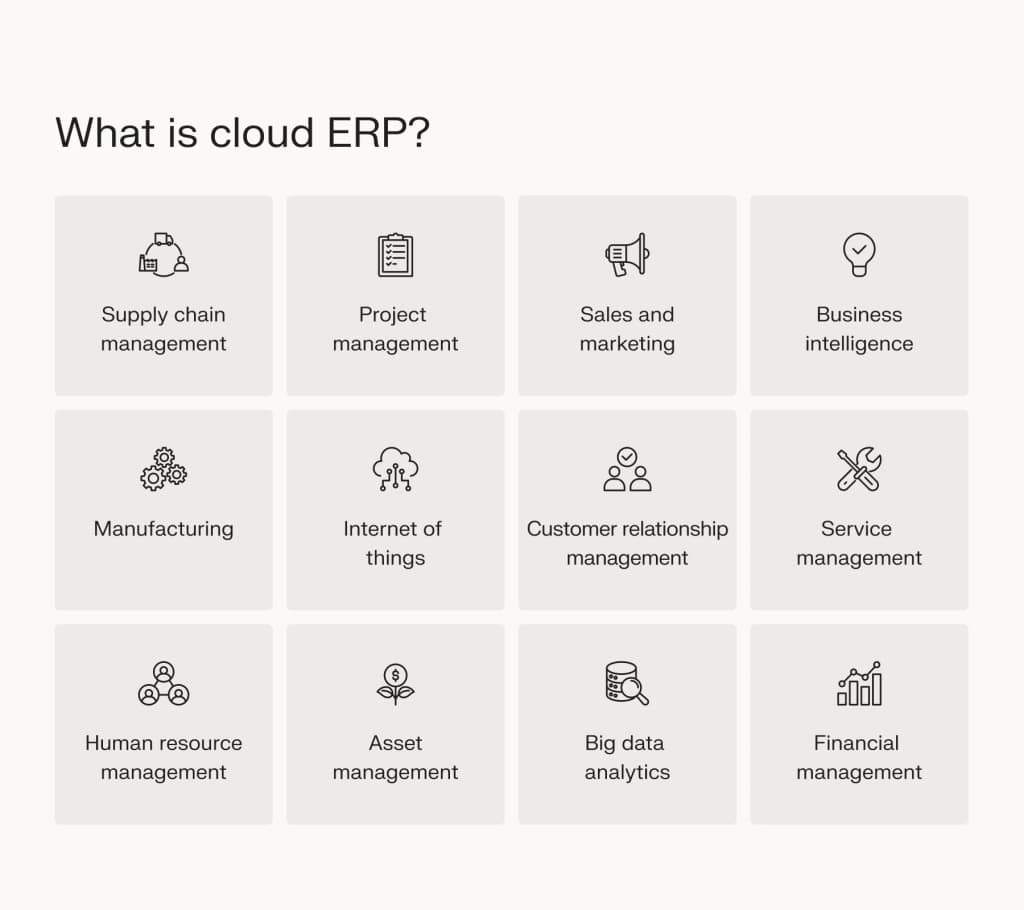
The key features and functions of ERP systems are:
- Streamlining and automating processes: ERP systems are designed to automate iterative business tasks to save time and reduce the likelihood of human error.
- Real-time visibility: They facilitate real-time monitoring of key business aspects, including the company’s financial statements, customer data, and inventory levels, which enhances transparency and enables better decision-making by management.
- Enriching collaboration: Centralization of data and streamlining of various processes with ERP improves cross-departmental collaboration. For example, sharing customer order history between the sales and customer service departments could help provide a seamless customer experience.
- Improved reporting and planning: ERP systems allow businesses to generate comprehensive reports such as budget forecasts, performance reports, and sales trends, which can be instrumental in strategic planning.
- Increased agility and flexibility: With the unification of all functions and processes into a single, real-time, accessible platform, ERP systems provide businesses with greater agility and flexibility, making it easier for them to adapt to changing market conditions, as per industry-specific needs.
The role of integrated ERP systems proves to be indispensable for different types of businesses, no matter their size:
- Startups: New businesses looking to reduce expenses, maximize revenue, and attain quick growth find ERP’s ability to scale with their operations extremely useful.
- Small enterprises: These entities aim to streamline operations, reduce costs, and build productivity, all of which can be achieved with the automated processes and real-time insights provided by ERP systems, along with continuous ERP optimization.
- Mid-sized companies: For these businesses, ERP simplifies complex workflows, empowers their workforce, and reduces risks associated with human error.
- Large organizations: ERPs mitigate risks, improve overall efficiency, and prolong the utility of existing systems, which is particularly beneficial for multi-national entities operating in various countries.
But how can you efficiently run and manage an ERP system within your organization?
ERP hosting is the answer.
Understanding the different types of ERP hosting
ERP hosting refers to deploying and managing ERP software on servers accessed remotely, usually through the internet. This can take various forms, such as on-premise ERP hosting, cloud ERP hosting, or hybrid ERP hosting.

On-premises ERP hosting
With on-premises ERP hosting, the ERP software is installed and runs on computers and servers that are physically located within the organization’s premises.
On-premises hosting typically caters to large corporations with complex business processes and deals with strict data security and compliance requisites, such as finance, healthcare, and government agencies.
For these types of organizations, on-premise hosting offers distinct advantages, such as:
- Retaining full control over the ERP system and data, providing extensive room for customization and integration with other systems.
- Keeping data confined within the company’s premises, potentially enhancing data security.
For instance, large financial institutions, such as major banks or investment firms, may prefer on-premise ERP hosting since they often have specific security requirements and regulations.
However, these perks do not come without challenges for these reasons:
- Software, hardware, and infrastructure: The organization is responsible for purchasing and maintaining all the necessary software licenses and hardware (such as servers, storage, and networking equipment), which can be quite expensive.
- Maintenance and upgrades: The company must maintain, update, and upgrade its ERP system itself. This requires having an in-house IT team or outsourcing these services, contributing to additional costs.
- Access and mobility: Access to the ERP system is generally limited to the on-premise network, although remote access can be set up. This can limit mobility compared to cloud solutions.
- Scalability: Scaling an on-premise ERP system can be more complex and costly, often requiring additional hardware and resources.
Cloud-based ERP hosting
Cloud ERP hosting refers to delivering ERP software and associated services over the internet. This approach contrasts with traditional ERP systems, which are usually installed on the company’s own servers (on-premises) and managed by their IT staff.
Cloud-based ERP systems are housed in data centers managed by cloud hosting providers that use virtualization technology. This technology allows a single physical server to be divided into multiple virtual servers, each acting as a separate, independent server. This is crucial because it enables the efficient use of physical server resources, allowing multiple customers and applications to run simultaneously on the same hardware without interfering with each other.
Since the data and applications are hosted in the cloud, they are not tied to a single physical location or server. In the event of a hardware failure, natural disaster, or other disruptions, the systems can be quickly restored or moved to another virtual server or physical location, minimizing downtime.
The key aspects of cloud ERP hosting are:
- Accessibility: Cloud-hosted ERP systems are accessible from anywhere with an internet connection, making it ideal for businesses with multiple locations or those that require remote access.
- Scalability: The cloud allows businesses to easily scale their ERP solution up or down based on their needs without the need for significant hardware investments.
- Cost-effectiveness: Typically, cloud ERP is offered under a subscription model, which can reduce upfront costs compared to traditional on-premise systems. This pay-as-you-go model also usually comes with managed updates and maintenance from the provider.
- Security and compliance: Reputable cloud ERP hosting providers invest heavily in security measures and compliance certifications, offering a level of security that can be challenging for individual companies to achieve independently.
- Integration and customization: Cloud-based ERP systems often offer integration with other cloud-based services and tools, as well as options for customization to meet specific business needs.
- Real-time data and analytics: By providing real-time data and analytics, cloud ERP systems enable more timely and informed business decisions.
If you’re working within a startup, a small to medium-sized business (SMB), or a rapidly growing company that seeks a cost-effective and scalable solution, cloud-based ERP hosting could be the most effective choice, especially if you’re looking for sustainability.
Virtualization in cloud-based hosting reduces the carbon footprint by optimizing the use of existing resources. Businesses operating in multiple locations or with remote teams will find cloud-based hosting practical, as it allows secure access from any location via the internet.
However, certain disadvantages might influence the decision to opt for cloud ERP hosting, such as:
- The reliance on a stable internet connection: This is a critical factor, although advancements like 5G and increased broadband penetration mitigate this.
- Managing bandwidth meticulously: This could involve actions like minimizing non-essential traffic, employing efficient routing protocols, or procuring a higher bandwidth plan.
- Data security concerns: Data is a significant concern for many businesses, but trusted cloud providers adhere to strict security measures, including firewalls, intrusion detection systems, and regular audits to ensure data security.
- Limited customization capabilities: Customization can be somewhat limited in a cloud environment compared to on-premise solutions. The strategy to overcome this limitation could be to define clear objectives and discuss customization options in detail with the cloud provider before migrating the ERP system.
For example, organizations like non-profits and educational institutions with a limited IT budget and resources benefit from cloud hosting, which offers reduced infrastructure costs and maintenance responsibilities.
Hybrid ERP hosting
The hybrid ERP hosting model presents a mix of on-premise components (such as your central database server) with cloud-based components (like sitewide document-sharing systems). It involves managed services for maintenance, where the ERP vendor, hosting provider, or a third-party service keeps your system updated and running smoothly.
This approach offers a blend of the security and control of on-premise hosting with the flexibility and scalability of cloud-based solutions. Beyond that, it also provides:
- Flexibility and scalability: The cloud components offer scalability to manage increasing workloads or temporary spikes in demand, while the on-premise components can be tailored for specific needs.
- Cost efficiency: Hybrid ERP can be more cost-effective than fully on-premises solutions as it allows businesses to pay only for the cloud resources they use, potentially lowering the overall IT costs.
- Disaster recovery and continuity: With data and applications spread across on-premise and cloud DR environments, the hybrid approach can enhance disaster recovery plans and ensure business continuity.
Hybrid hosting can be perfect for organizations transitioning from on-premise to cloud-based ERP systems and businesses with specific needs not wholly met by either solution on its own. Even in light of its increased complexity in management and potential integration challenges, hybrid hosting can provide an instrumental solution for quite a few organizations.
Choosing the right ERP hosting option
Choosing the right ERP hosting option is a crucial decision for businesses, as it impacts the efficiency and effectiveness of their operations. Here are the main aspects to consider:
- Business size and complexity: Larger or more complex businesses might require more robust ERP solutions with advanced features, while smaller businesses may benefit from more streamlined, cost-effective options.
- Budget: The cost of ERP hosting varies significantly. Businesses must balance their financial resources with the need for a comprehensive ERP system.
- IT resources and expertise: Companies with limited IT staff may prefer a hosting option that offers more support and maintenance, whereas businesses with strong IT teams might opt for solutions that offer more control and customization.
- Scalability: The ERP system should be able to grow and adapt to the business. This means easy integration of new features, users, and processes as the company expands.
- Need for collaboration: If the business requires high levels of collaboration across different locations or departments, the ERP system should support seamless, real-time data sharing and communication.
Based on these factors, cloud hosting is considered the best choice for many companies due to its flexibility and cost-effectiveness.
Making a business case for private cloud-based ERP hosting
Think of private cloud hosting as the utility service for your digital resources. Similar to how your business only pays for the electricity, water, or internet it consumes, with private cloud, you only pay for the IT resources you use.
This effectively brings predictable costs, with the added ability to scale resources, thereby optimizing IT expenditure. But what else do businesses stand to gain from switching to private cloud hosting?
- Optimal availability: Using a robust infrastructure designed for high availability, private cloud hosting erases the worries of downtime from your list. Seamless automated failover mechanisms ensure maximum uptime, keeping your business-critical ERP operations running smoothly and continuously.
- Enhanced performance: Private cloud hosting promises low-latency connectivity and high-throughput capabilities – elements that translate into efficient, seamless business operations.
- Uncompromised security: Within a private cloud hosting environment, your single-tenant scenario is secured and isolated, protected by dedicated firewalls, and offers you complete control over networking configurations.
- Swift implementation and scalability: One of the most significant advantages of private cloud hosting is the swift deployment of the system, along with the flexibility to scale resources effortlessly according to the evolving needs of your business.
- Resource management and transparent pricing: With private cloud hosting, you maintain complete authority over the allocation of your resources, coupled with a transparent pricing structure. This resource-based pricing model interoperates predictability in costs and optimized utilization of your IT budget.
The advantages of switching to a private cloud-based ERP system are not just theoretical but have yielded tangible results for businesses worldwide. Exemplifying this is the globally recognized coffeehouse, Starbucks. The company deployed Oracle ERP, a cloud-based system, to automate its internal processes and everyday business activities, resulting in streamlined operations.
Along with this, Sanko Gosei Technologies, an automotive manufacturer, transitioned to a manufacturing cloud-based ERP system and witnessed an increase of 30% in business efficiency within just 120 days of implementation.Regardless of the size of your business, the transition to private cloud hosting for your ERP system can power a transformative change. So, don’t wait – connect with a private cloud hosting expert like Liquid Web and discover what private cloud hosting can do for your business.
Why opt for Liquid Web for your ERP hosting needs?
If you’re exploring reliable and robust ERP hosting solutions, a service provider worth considering is Liquid Web. Known for fully managed web hosting solutions, Liquid Web goes beyond basic hosting to facilitate and streamline your ERP hosting needs, comfortably accommodating scaling requirements for Sage, Infor M3, Acumatica, and more.
Amongst the vast range of hosting options offered by Liquid Web for ERP, one particular standout is the Private Cloud Powered by VMware. This hosting environment is secure, effective in scaling, and optimized for high performance, serving as an ideal platform for your ERP system.
Liquid Web’s ERP hosting solutions offer distinctive attributes such as:
- Scalability and flexibility: The resource-based pricing model ensures that the scalability of your resources aligns with the growth of your ERP needs. Additionally, the absence of per-VM fees and the ability to deploy numerous VMs equate to unparalleled flexibility.
- High availability and performance: The blend of redundant hardware along with automatic failover assures continuous uptimes for your crucial ERP operations. Features such as high-performance networking, storage, and load balancing contribute to optimal ERP application performance.
- Security and compliance: A secure firewall, DDoS protection, and integrated backups form the triune security strategy to safeguard your ERP data.
- Managed services and support: From managing the entire virtual data center to offering round-the-clock expert support, Liquid Web ensures that you can focus solely on your ERP application.
- Cost efficiency: The synergy between predictable, resource-based pricing and reduced operating and hardware costs delivers cost efficiency to your business.
- Ease of transition and migration: Whether it’s transitioning from traditional hosting or migrating from existing VMware environments to a secure, virtualized setting, Liquid Web simplifies the process, even offering free migrations for new server orders.
With its capability to provide tailored solutions, Liquid Web fulfills specific business needs across the spectrum, from small-scale startups to large multinational enterprises.
Take the next step towards efficient ERP hosting with Liquid Web
ERP systems have an instrumental role in the operational efficiency of contemporary businesses. Opting for the right hosting option is essential to fully harness the potential of your ERP system, whether that’s a VPS solution or cloud-based cluster.
Always remember to factor in your individual needs and carefully evaluate potential providers. Elements like uptime assurances, scalability, security, and above all, the quality of support services demand keen attention.
Liquid Web offers sturdy security, seamless scalability, constant uptime, and world-class support services, making it the preferred choice for businesses of all sizes. In addition to that, competitive pricing and expert handling of the complexities associated with migration combine to create an exceptional customer experience.It’s time to leverage efficient ERP hosting to your advantage – contact Liquid Web today and transform your ERP hosting experience!