


 Liquid Web
 When you’re in the market for a new server, you’re bound to be considering a lot of different options. And for companies that are growing, bare metal vs cloud might be a question you’ve heard a few times.
Both bare metal and cloud hosting are growing quickly. The cloud provider market was worth an estimated $178 billion in 2022, while the bare metal market reached $5.4 billion in the same year.
For many users, deciding whether to go with a traditional cloud server or pursue a more dedicated bare metal option is one of the first choices you need to make when comparing servers. Both of these options have their advantages and drawbacks, so it’s important to go over each of them carefully.
We’ll take a look at what each of these options includes and which one makes more sense for you based on your unique needs.
Here’s what we’ll cover:
- Cloud servers 101
- Bare metal servers 101
- Bare metal vs cloud server
- Choosing bare metal vs cloud
- Final thoughts: Bare metal vs cloud — how to choose
Key points
- Cloud servers offer many customizable options to users, ranging from affordable shared cloud hosting to dedicated virtual servers.
- Bare metal servers are always dedicated to one user, yet they offer many of the same benefits as cloud servers.
- Deciding on whether to go with bare metal vs cloud comes down to budget, the speed of setup you require, and your company’s security needs.
Cloud servers 101
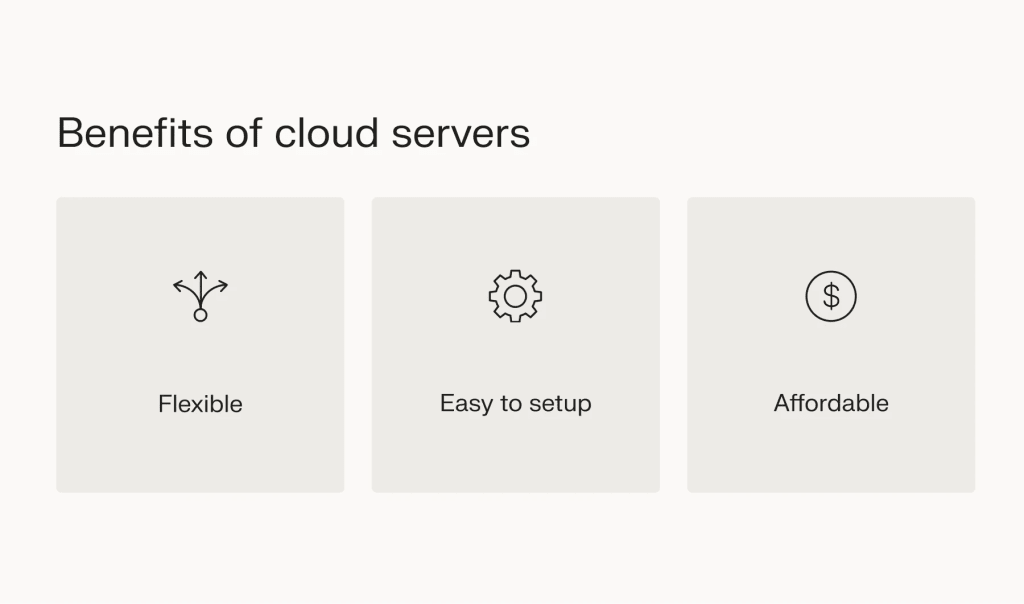
First, let’s review what makes cloud servers so popular. Cloud servers essentially work by configuring dedicated virtual machines (VMs) for potentially thousands of different users. You’ll access your information over a network, instead of accessing it physically.
Most of the time, each user has their own virtual server on the machine, with their own dedicated resources, but all of them share the same physical server.
You’ll still be able to access all of your data on demand, so no matter when you need something, you’ll be able to find it. Plus, you usually have full control over how your server is set up with a cloud server.
This is the most cost-effective type of cloud hosting, as it doesn’t require as much dedicated IT infrastructure as providing individualized servers for each customer. For example, Liquid Web offers cloud VPS hosting starting from $5 per month.
You’ll find a wide range of cloud solutions, from public cloud services intended for millions of users to dedicated servers with fully managed support.
Bare metal servers 101

On the other hand, bare metal servers refer to physical servers that are dedicated to only one customer. Because of this, they’re sometimes referred to as dedicated servers.
You can even see your own physical machine in a data center, and no one else will be using your dedicated hardware. But unlike an actual physical server, you’ll still access a bare metal server over a network, so your server could be located in a completely different country.
Unlike a cloud server, a bare metal server will have physical hardware, like CPU and RAM, dedicated to your server. This means you may need to physically update the machine if you want to improve your computing environment, so downtime can be a concern if you only host on one server.
Finally, because of the computing resources required, bare metal servers tend to be more expensive than most cloud computing solutions. The functionality is the reason for the cost, but Liquid Web offers very customizable bandwidth and CPU options to go along with that increase in price.
What’s the difference between bare metal and cloud servers?
Now that we’ve broken down the basics of both of these server types, it’s time to look closer at how bare metal vs cloud servers really differ from each other. We’ll break down the main areas where these two options contrast, and highlight which category each of them shines in.
1. Scalability
While both bare metal and cloud options can scale with your business, it’s generally easier to scale a virtual server over a physical one. This is because, with a physical server, you’ll need to manually install additional resources, such as more GPU or data storage, in order to improve performance.
Cloud servers, on the other hand, are able to quickly and easily add or remove resources such as additional processing power. You simply order additional resources for your private cloud, and your hosting provider takes care of the rest.
2. Price
For a lot of customers, the choice between a bare metal vs cloud server often comes down to cost comparison. If budget is your main concern, you’ll want to break down what your estimated cost would be for similar resources with cloud vs bare metal and see what makes more sense for you.
In general, you’ll find cloud server hosting can start as low as $5 per month for a virtual private server (VPS). Meanwhile, bare metal servers can start from around $150 per month.
3. Security
Next, let’s compare security standards between bare metal vs cloud servers. Bare metal servers are single-tenant setups, so they tend to be the more secure option.
If you go with a bare metal server, you’ll have a whole set of hardware resources working solely on your website or application. You don’t have to worry about any of your neighbors not following best practices or inadvertently passing along some malware to you, so it has a lot of advantages.
But that doesn’t mean cloud servers are insecure — most come with integrated firewalls that are equipped to protect your cloud infrastructure.
4. Difficulty
While ease of use is subjective, setting up your server, whether it’s running on bare metal or cloud, comes with its own challenges you’ll have to address.
Bare metal servers have a lot of moving parts, so they tend to be more difficult to set up initially. You’ll probably be choosing between different processors or SSDs, so you have hardware to customize and an entire server to set up. However, since you can’t scale your resources as quickly, they generally aren’t as complex to maintain.
Cloud servers are more or less the complete opposite. With these, you’re only using part of a server, so your setup is generally easier. Most of the time you’re delegating which resources go where. Customizing your cloud server is easy and flexible, but these quick changes do require some more work on the back end.
Bare metal vs cloud: performance comparison
When comparing bare metal versus cloud performance, the key differences go beyond basic features to how each infrastructure handles real-world workloads over time.
Cloud hosting is designed for flexibility and rapid scaling, offering virtualized resources that can expand or shrink on demand. This makes cloud a strong choice for workloads that vary widely in intensity or require global distribution.
Bare metal servers, on the other hand, deliver dedicated, non-virtualized hardware with predictable and stable performance because all CPU, memory, and storage resources are exclusively yours. Without a hypervisor layer, bare metal can offer lower latency, consistent I/O throughput, and fewer performance variances under heavy or continuous load. Bare metal is particularly effective for sustained high-performance tasks like large database operations, high-concurrency web applications, and compute-intensive workloads where performance consistency matters most.
Modern cloud solutions have narrowed the gap with improvements in underlying infrastructure and options like dedicated instances, but the fundamental performance trade-offs remain: cloud excels at agility and elasticity while bare metal excels at raw, predictable performance with minimal overhead.
Choosing between them should be based on whether your priority is scalability and flexibility or consistent high performance with full hardware control. If your priority is flexibility and scaling on demand, cloud infrastructure often provides a better overall performance strategy, especially for applications that need to grow quickly or handle unpredictable traffic patterns.
Choosing bare metal vs cloud
Now that we’ve gone over what cloud and bare metal servers are, along with some of their key differences, it’s time to look at how to choose when comparing the two. Both can be a good choice, but it all depends on your unique needs.
Review your budget
Price is a huge differentiator between bare metal and cloud servers.
If your business is just starting out, you might not have the funds for a resource-intensive bare metal server, even if you’ve got the ambition for one. You might decide something like a custom VPS solution works best in that case.
Think about how your products work
If you run an application that requires some high-performance computing, you might need to go with bare metal to better handle the workload. This is especially true if you’re running an application that’s resource-heavy and requires specific components you might not find on a typical cloud server.
You might also find your operations are more consistent with a bare metal server.
Consider how dynamic your workload is
Some companies experience fluctuating seasons with periods of high demand and low demand.
If you have times when you can save money by cutting unused resources, you might benefit from virtualization. Cloud servers can quickly scale resources, so you can always upgrade or downgrade as needed to adjust to demand.
Consult with an expert
Finally, you can always reach out to one of Liquid Web’s experts to find out which solution makes more sense for you. We’ll be able to help you out based on your specific needs.
Bare metal vs cloud FAQs
Final thoughts: Bare metal vs cloud — how to choose
Choosing between bare metal vs cloud isn’t always an easy or direct choice, but both server configurations offer some great benefits to their users.
While cloud servers are scalable and quick to set up, bare metal servers come with dedicated resources and more complete control for developers. It all depends on what your company needs from your hosting provider.
Whether you decide on a secure and dedicated bare metal server, or an affordable private cloud host, you’ll find what you’re looking for from Liquid Web.
Check out our plans to get started today.