


 Liquid Web
 While Fastly, Amazon, or Dyn taking the internet down with themselves happens from time to time, such major internet outages are few and far between and shouldn’t cause a reputation issue for your brand.
After all, if a tornado wrecks the power lines, it’s not on you.
However, if only your retail store loses power, that would mean bad press for you. And that’s exactly what happened to these websites when they crumbled under peak traffic.
Below, we break down the biggest website crashes and explain ways to keep your site online when it matters most — such as with high availability hosting from reliable providers like Liquid Web.
Key points
- Sudden traffic spikes have downed websites of all sizes, including big names like Twitter, Amazon, and Costco.
- Many ecommerce websites have found themselves on shaky ground during Black Friday, Cyber Monday, or a brand-specific promotional offer.
- Government agencies, booking systems, and streaming platforms have struggled with timed releases and deadlines.
1. Ellen DeGeneres’ selfie breaks Twitter

While social media users rallying around a viral trend and overwhelming a particular website is not uncommon, one of the first websites that social media users broke was a social media website itself.
Ellen DeGeneres’ selfie at the 2014 Oscars, featuring Bradley Cooper, Brad Pitt, Jennifer Lawrence, Angelina Jolie, Julia Roberts, and several other celebrities, got retweeted 2 million times within a few hours, taking Twitter (now X) down for 20 minutes.
2. Amazon suffers a costly 2018 Prime Day crash
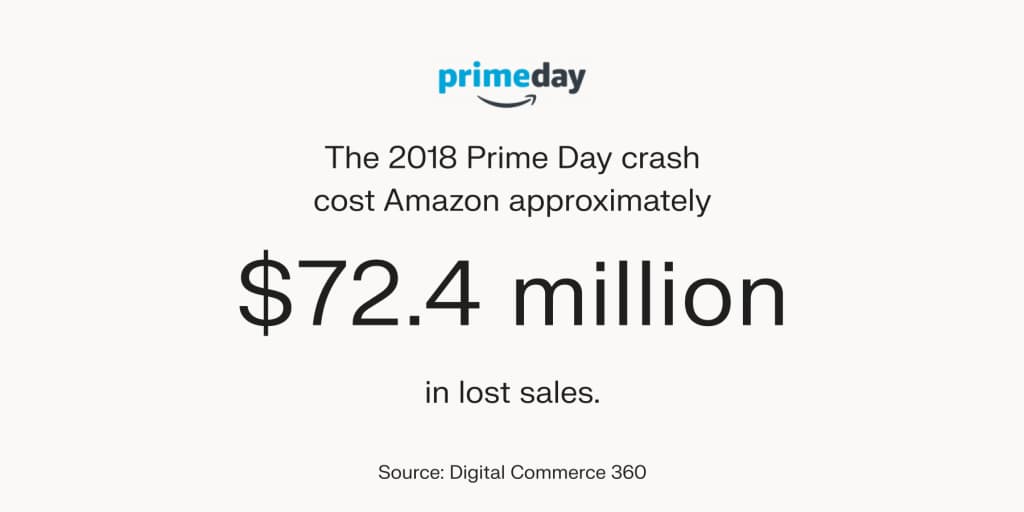
While Twitter came out relatively unscathed from the Oscars crash, the same couldn’t be said about Amazon, which suffered a crash of its own on its 2018 Prime Day, costing it around $72.4 million in lost sales.
Shortly after the start of Prime Day, customers began to see images of dogs on Amazon’s website instead of the deals they were waiting for. The overwhelming traffic of global customers broke Amazon’s Sable, which handled its retail and digital businesses.

Amazon had to temporarily cut off all international traffic, use a scaled-down backup front page, and manually add new servers to get its services back to normal.
Based on Amazon’s internal documents, it appears that an auto-scaling feature failed at its moment of truth. Instead of relying on auto-scaling to adjust servers according to the traffic demand, Amazon had to add server power manually.
Given that Amazon also owns Amazon Web Services (AWS), a cloud computing service, this outage shows the importance of crash-proofing your ecommerce website before a big sale.
3. Taylor Swift’s album launch downs Spotify
When millions of Swifties (fans of Taylor Swift) turned to Spotify to listen to her newly released album “Midnights” in 2022, the streaming platform had to take a breather. Fans started tagging Spotify in their tweets, reflecting their displeasure.
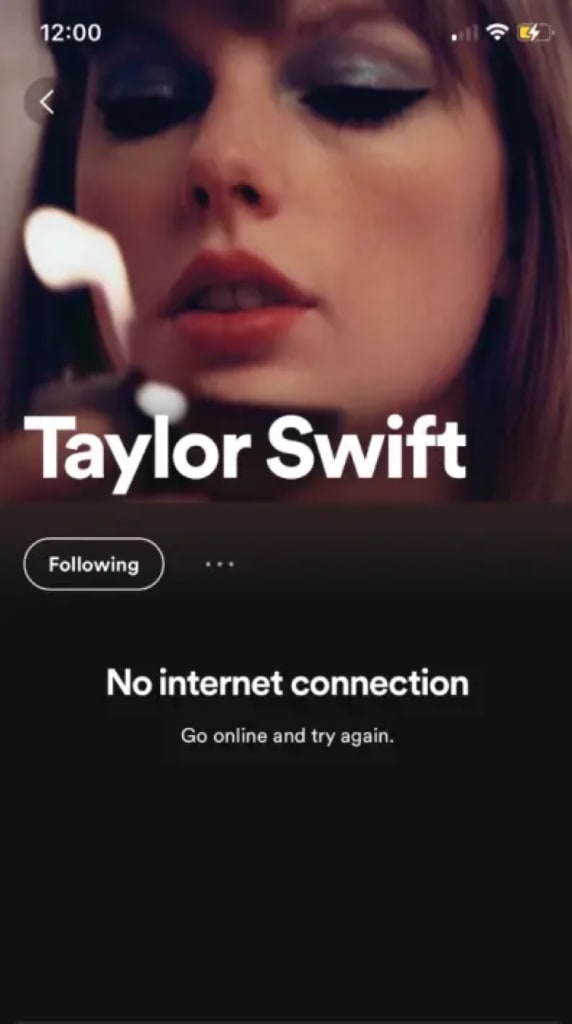
Luckily, Spotify’s outage was short, and fans managed to listen to their favorite artist after a few minutes.
4. Ticketmaster’s crash keeps some Swifties from buying tickets
A month after the Spotify crash, Swifties caused another major website outage — Ticketmaster, which was managing the tickets for Swift’s Eras Tour. Despite opening the ticket sales only to verified fans, it received 3.5 billion requests on the big day.
Due to the overwhelming traffic, Ticketmaster’s system crashed repeatedly throughout the sale, causing technical glitches and preventing customers from buying tickets. Fans had to wait for several hours just to get to the next step.
While Ticketmaster put the blame on bots, the whole situation showcases the importance of configuring a high-availability website, implementing intelligent cloud-based firewalls, and setting up robust anti-bot systems.
5. ‘Love is Blind’ reunion blindsides Netflix
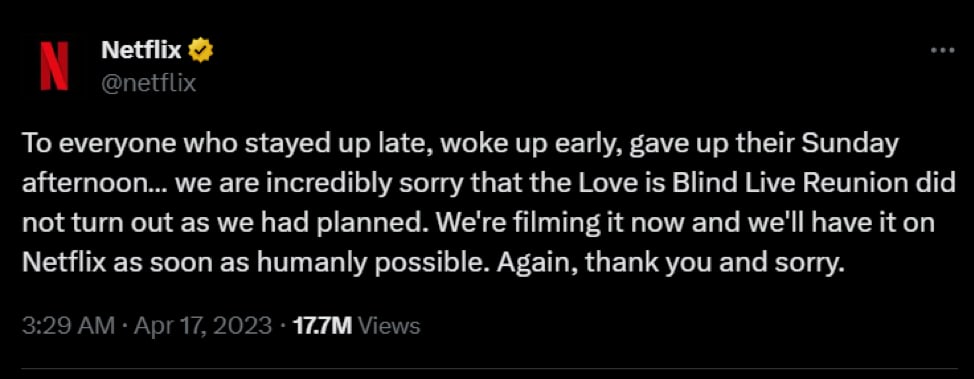
Netflix isn’t safe from overwhelming traffic, either. While trying to air the reunion of its popular live show “Love is Blind,” the streaming giant failed to deliver the show in real time. After no success for an hour and a half, Netflix had to resort to taping the reunion because of a lack of resources.
According to Netflix co-CEO Greg Peters, the issue was caused by a bug introduced during its efforts to optimize the live streaming performance, which came out in the open during the overwhelming traffic Netflix received for the live show.
6. Super Bowl ad proves too popular for Coinbase

Coinbase got almost everything right when it came to its debut ad during the 2022 Super Bowl. It was minimal. It was cool. And it reminded customers of the old bouncing DVD logo screensaver.
That said, while the ad worked by going viral, the Coinbase website didn’t. Due to the high influx of visitors following the ad, it suffered one of the biggest website crashes ever.
Given that Coinbase paid an estimated $14 million for the ad, this crash highlights the importance of making your business website highly available.
7. U.S. healthcare website goes down shortly after its launch
Government websites aren’t safe from high traffic either — with a U.S. healthcare website feeling the brunt of it on launch day.
HealthCare.gov launched on Oct. 1, 2023, as directed by the Affordable Care Act, to act as the official healthcare exchange for residents to compare different insurance plans. Soon after launch, it saw 250,000 visitors despite its expectations of only 50,000, resulting in one of the biggest website crashes ever within a couple of hours.
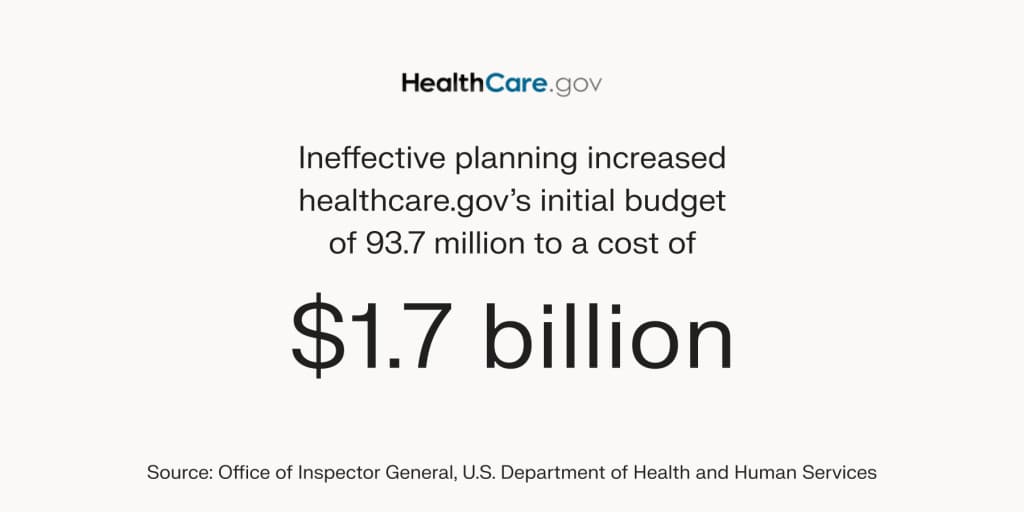
Even though the government fixed HealthCare.gov over time with gradual changes, the incomplete planning resulted in a cost of $1.7 billion, way over the initial budget of $93.7 million.
8. J.Crew has a difficult Cyber Monday
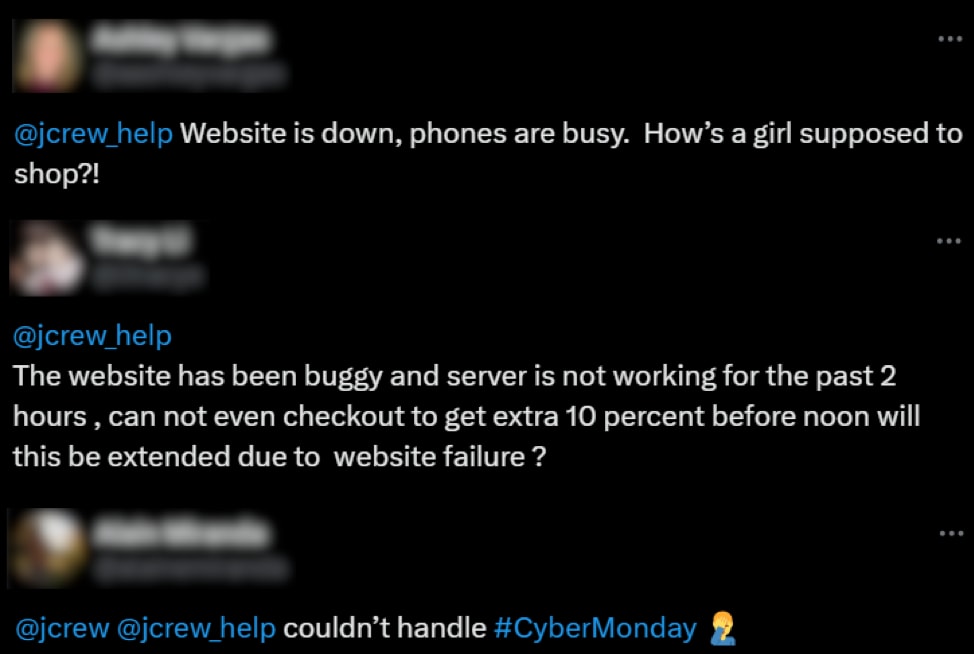
While Black Friday and Cyber Monday bring a lot of inactive customers out in the open, your ecommerce store needs to stay operational to allow them to shop. That’s something J.Crew struggled with on Cyber Monday in 2017.
After giving a discount of 40 percent throughout Cyber Monday, J.Crew hardly made it past noon EST before joining the list of one of the biggest website crashes, losing thousands of customers ready to buy its products.
9. COVID-19 test requests crash healthcare website
The 2020 pandemic forced many citizens to opt for noncontact, digitized processes. That said, rushed solutions failed here and there under peak loads. One of the biggest website crashes amid those failures belongs to a network of hospitals near Ontario’s capital of Toronto.
Only a few days after Ontario suspended walk-in services and turned to appointment-only tests, the website for the Scarborough Health Network (SHN) went down due to the high volume of customers trying to book an appointment for COVID-19 testing.
10. UK students overwhelm A-level results website
While visitors might forgive a website for a couple of minutes’ delay in releasing an album — as was the case with Spotify and Swift’s “Midnights” — a website failing on the day it’s supposed to reveal the results of students’ hard work isn’t going to fare well.

Unfortunately, that’s exactly what happened when the Universities and Colleges Admissions Service (UCAS), a UK-based organization that manages higher education applications, failed on the day millions of students wanted to find out their A-level results in 2023.
11. Hawking’s thesis attracts a storm to Cambridge’s website
Getting viral isn’t only limited to sales, games, and videos. Stephen Hawking, a renowned scientist who helped the world understand black holes, showed us that even a thesis can go viral.
When Hawking’s Ph.D. thesis, “Properties of expanding universes,” was made freely available — previously, it cost £65 — on Oct. 23, 2017, it attracted 60,000 requests on just the first day, crashing the Cambridge website.
While 60,000 might appear a small number, the thesis saw only 199 requests in the 17 months before it was available for free, according to the BBC.
12. Meghan Markle’s engagement stuns Line the Label
Similar to Coinbase, Line the Label dropped the ball right in the middle of its big moment. When Meghan Markle came out to announce her engagement to Prince Harry, Duke of Sussex, while wearing Line the Label’s white belted coat in 2017, the brand’s website couldn’t keep up with traffic.
Shortly after, customers couldn’t access Line the Label’s website — getting an error of “heavy load (queue full).” If the brand had opted for a scalable hosting solution, it might’ve been able to land many more new customers that day.
13. Chipotle drops the ball on National Avocado Day
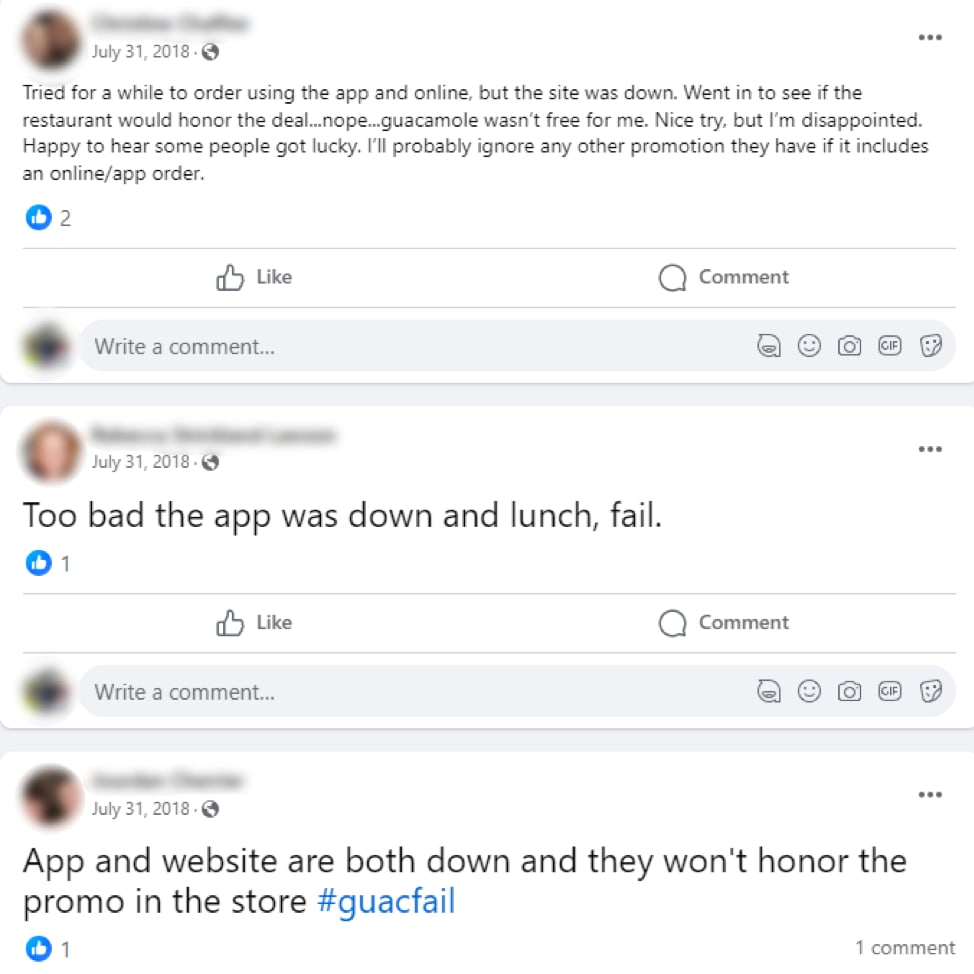
A successful marketing stint attracts customers, but you still need to meet their expectations. On 2018’s National Avocado Day, Chipotle, a casual fast food chain, ran a promotion offering free guacamole with orders via its website or app.
However, once the customers started taking up its offer, Chipotle’s website and app crashed. Chipotle’s infrastructure was unable to handle a large surge of traffic, which damaged its brand reputation and prevented it from attracting more leads.
14. Pokémon GO launch sees hiccups

For an online game publisher, there’s nothing better than getting viral in the early days of the release to reach as many gamers as possible. Niantic managed to hit the jackpot with Pokémon GO, which quickly became a global cultural phenomenon in 2016.
That said, the early days of Pokémon GO were far from smooth sailing since it surpassed the global server usage expectation within only 15 minutes of launch in Australia and New Zealand. It received 50x the expected traffic and 10x the expected worst-case scenario, taking the servers down with it, according to The Guardian.
15. Costco crashes on Thanksgiving Day
Costco, the world’s third-largest retailer, isn’t safe from demand-induced crashes either. On Thanksgiving Day in 2019, the storm of discount shoppers crashed Costco’s website and app.
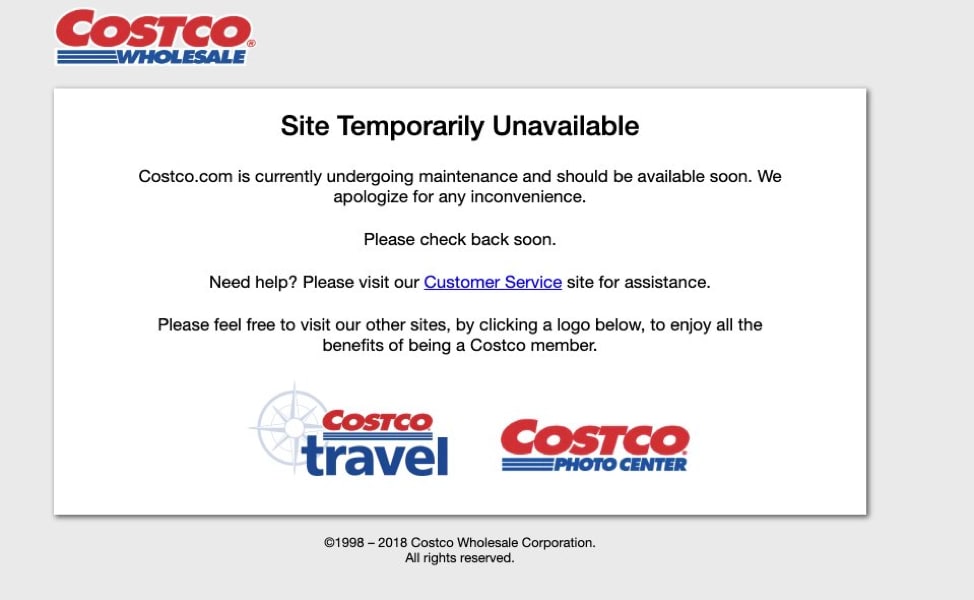
Costco’s website stayed down for almost 16.5 hours due to high traffic demand, costing it up to $11 million in sales. Plus, it also resulted in lost brand reputation.
16. U.S. election vote strains Canada’s immigration website
One of the most unexpected outages among the biggest website crashes is Canada’s immigration website, which saw extra traffic because of the 2016 U.S. election vote.
After the announcement of presidential candidate Donald Trump’s victory, a number of U.S. citizens explored the option of immigrating to Canada, which ended up overwhelming the website’s servers.
That said, according to CBC News, the website’s servers were under strain even before the election results due to a documentation deadline.
17. Black Friday takes down John Lewis website
John Lewis & Partners, a British high-end retailer, suffered a blow in the middle of 2018 Black Friday. As its sales attracted an overwhelming interest, the website’s infrastructure failed to support its marketing efforts, leading to a major website outage.
That said, since John Lewis had the same promotional offers running in its retail shops, it turned out comparatively safe amid a Black Friday disaster.
18. Black Friday leaves Macy’s in a ‘shopping jam’
Macy’s, an American department store chain, has had its own share of struggles on Black Friday. In particular, in 2016, Macy’s had to show a “temporary shopping jam” message to its shoppers due to overwhelming traffic.
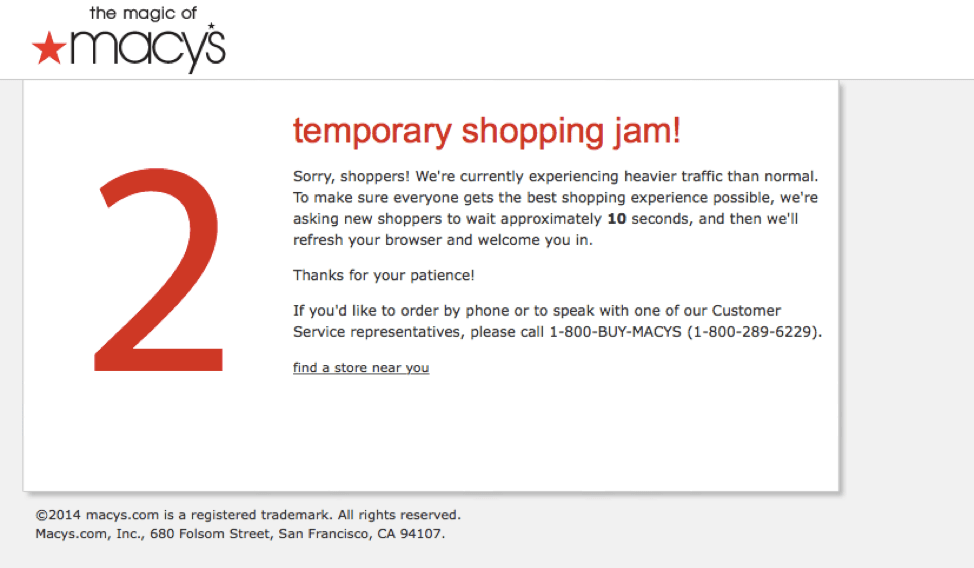
Even the visitors who managed to break through the error message didn’t get to benefit from the sales since they couldn’t add items to their carts.
19. lululemon struggles on Black Friday

lululemon also had a difficult time accepting payments on Black Friday in 2018. Customers couldn’t check out their carts because the website crashed repeatedly during the purchasing process.
After failing to secure sales, hundreds of customers stormed lululemon’s social media pages and expressed their dissatisfaction, negatively affecting the brand’s reputation.
20. Kate Middleton fans overwhelm Jenny Packham
Markle isn’t the only one from the British Royal family who crashed an ecommerce website.
Kate Middleton, the Duchess of Cambridge, downed Jenny Packham’s website by wearing the designer’s dress when appearing with her newborn son in the spotlight in 2013.
21. Dog adoption site crashes under the spotlight
Luckily — or unluckily, if you have your website hosted on an inflexible infrastructure — the spotlight isn’t limited to only big brands. With so many media channels in the mix, any website can go viral at any time.
That’s exactly what happened with Christine Clauder’s adoption website, which she set up to help Hank, a rescue dog. Expecting 20-50 visitors a day, Clauder opted to use an “unlimited” plan with her previous hosting provider, GoDaddy.
However, once the word got out, the website crashed. She called for an upgrade, but it soon crashed again for 28 hours. Meanwhile, her website kept appearing on news websites, including HuffPost, Yahoo, Daily Mail, and NY Post.
Clauder had to get another upgrade worth $500, which was also not enough since she soon went on national TV. As a result, she went for the final update that cost $1,500. Unfortunately, that didn’t solve her traffic issue, either.
Finally, she turned to a Nexcess managed WordPress hosting plan, which resolved her issues. Within 12 minutes, her website was migrated and free from crashes.
How to avoid website outages
A down website translates into unhappy customers, unfinished sales, and unsuccessful marketing campaigns. Instead of making money from going viral, your brand ends up losing revenue in the process.
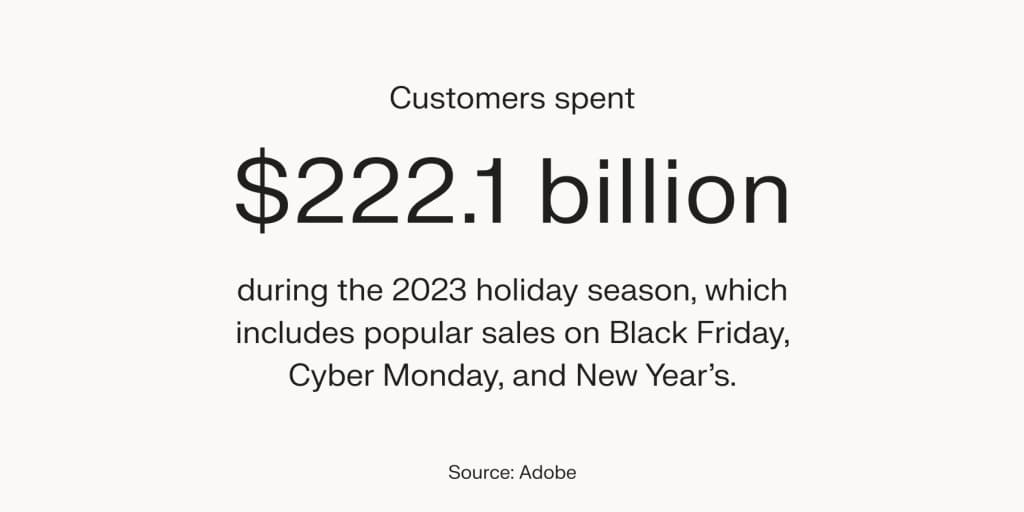
In particular, if your website fails during the holiday season, like many of the websites above, you risk losing a piece of the $222 billion pie that it offers.
Here are a few steps to avoid joining the list of the biggest website crashes:
- Invest in scalable infrastructure: Most of the websites on the list crashed because their IT infrastructure crumbled under peak loads. The best way to avoid such crashes is to opt for a flexible infrastructure that can scale up and down according to demand.
- Focus on your website’s security: While ecommerce websites have a hard task during big sales and the holiday season, websites for government agencies, educational institutes, and event booking websites are also prone to cyberattacks. In particular, hackers use distributed denial of service (DDoS) attacks to take a website down by overwhelming the server with bot requests.
- Use a content delivery network (CDN): A CDN helps improve the routing between internet users and your brand. Instead of customers overwhelming the website, their requests are handled by a distributed network of global servers.
Final thoughts: 21 of the biggest website crashes of all time
If a vulnerability in global internet services takes the likes of WhatsApp, Apple, CNN, and the New York Times down, your website failing, too, will seem like a drop in the bucket. That said, regardless of whether the rest of the internet is stable, a down website means a closed business.
If that’s something you want to avoid, consider opting for Liquid Web’s scalable cloud VPS to adjust your resources as required within seconds instead of worrying about arduous server migrations. Explore our cloud VPS and other VPS hosting plans to get started today.